
Enamel-Preserving No-Prep Veneers in Los Angeles, CA, Designed Around Your Natural Teeth by Dr. Dani B.
If you want to improve your smile while minimizing how much healthy enamel is altered, no-prep veneers are worth understanding before you commit. Dr. Dani B. provides no-prep veneers from his Los Angeles cosmetic dentistry practice and welcomes patients from Beverly Hills. Using a conservative, facial-aesthetic approach, he designs ultra-thin porcelain veneers for appropriately selected patients who want to preserve as much natural enamel as possible.
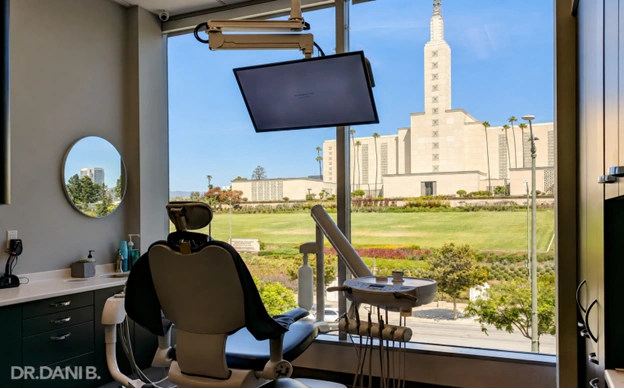
A Conservative Approach to Enamel-Preserving Smile Design
Veneer preparation varies depending on the treatment approach, tooth position, and cosmetic goal. Dr. Dani B.’s approach emphasizes preserving as much natural tooth structure as the individual case allows. For no-prep veneers, that means using ultra-thin porcelain with little to no enamel reduction in appropriately selected cases.
Patients considering no-prep veneers may have different reasons for exploring a more conservative approach. Some want to preserve as much natural enamel as possible, while others are looking for subtle improvement to a gap, chip, discoloration, or uneven tooth shape. Each case begins with an exam and a conversation about whether a no-prep approach genuinely fits.
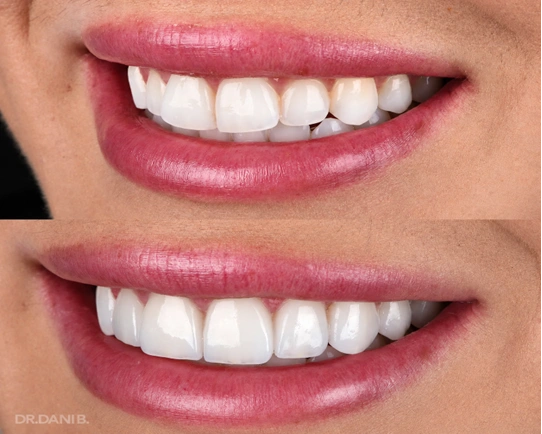
What Are No-Prep Veneers?
A no-prep veneer is a very thin, custom-crafted porcelain shell bonded to the visible front surface of a tooth. Compared with conventional veneers, this approach is designed to minimize changes to the underlying tooth, allowing little to no enamel reduction in appropriately selected cases.
That distinction is important for patients who are concerned about having healthy tooth structure removed for cosmetic treatment. However, “no-prep” does not mean that every case can be completed without altering the tooth at all. Minor contouring may still be needed to achieve the appropriate fit, proportion, or appearance.
Whether a true no-prep approach will work depends on factors such as tooth position, available space, existing color, bite, and the cosmetic change being planned. Dr. Dani B. evaluates those factors before determining how much, if any, preparation is appropriate.
For more detail about when and why enamel may be reduced for veneers, see Do Veneers Require Shaving Your Teeth?
No-Prep Veneers for Los Angeles and Beverly Hills Patients
Dr. Dani B. provides no-prep veneer consultations and treatment from his Los Angeles office at 10700 Santa Monica Blvd., Suite 301. The practice also welcomes patients from nearby Beverly Hills and surrounding communities who are seeking a conservative approach to cosmetic dentistry.
Conservative Planning and Custom No-Prep Veneers With Dr. Dani B.
Dr. Dani B.’s no-prep veneer approach combines conservative treatment planning with individualized cosmetic design. Important parts of that approach include:
Conservative enamel preservation
Treatment planning focuses on changing as little healthy tooth structure as the case allows.
Custom porcelain with an in-house Master Ceramist
Shape, shade, translucency, texture, and characterization are planned around the individual smile rather than a single standard system.
Facial-aesthetic and digital planning
Photographs, digital scanning, smile design, and the patient’s facial features help guide veneer proportions and appearance.
Virtual consultation options for traveling patients
Patients outside Los Angeles may begin with a virtual consultation before coordinating in-office visits.
Individual candidacy guidance
If no-prep veneers are not appropriate for the tooth position, bite, enamel, or cosmetic goal, Dr. Dani B. can discuss minimal-prep, traditional veneer, or other options instead.
These reviews reflect individual patient experiences. Treatment needs, comfort, and cosmetic results vary by patient.
“Always have a wonderful time here. Everyone’s so nice and they answer all your questions. Wouldn’t ever dream of going anywhere else.”
What Enamel-Preserving No-Prep Veneers Can Do for Your Smile
For the right candidate, no-prep veneers can make subtle cosmetic changes without requiring the degree of tooth preparation associated with some traditional veneer cases. They are particularly useful when the desired change can be achieved by adding carefully designed porcelain rather than substantially reshaping the tooth.
Subtle, Additive Cosmetic Changes
No-prep veneers are well suited to additive improvements, such as closing a small gap, refining a chipped or slightly uneven edge, evening out mild asymmetry, or softening minor discoloration. They add to the tooth rather than reshaping it, so they work best where there is room for a thin restoration.
A Design Tailored to Your Face
Dr. Dani B. designs no-prep veneers using a holistic, facial-aesthetic approach, considering your lip line, tooth proportions, bite, and how much of your smile shows when you speak and laugh. The goal is a natural, proportionate result rather than an overly white or uniform look.
Who Is a Candidate for No-Prep Veneers
The best candidates for no-prep veneers generally have healthy teeth and gums and are looking for minor cosmetic improvements, such as small gaps, mild discoloration, small chips, or slightly small or irregular teeth. There also needs to be enough space for an ultra-thin restoration to fit appropriately, and realistic expectations matter as much as the teeth themselves.
No-prep veneers are not the best fit for every smile. Significant crowding, large or protruding teeth, severe or very dark discoloration that could show through an ultra-thin veneer, large gaps, or more involved alignment problems may call for a different approach. Active tooth decay, gum disease, and signs of grinding or clenching are also considered during treatment planning.
“Wonderful experience here with the staff and the dentist. The office is beautiful, and everyone is just so nice! I love that we can communicate via text and that I get reminders about my appointments that way”
How Dr. Dani B. Evaluates Your Smile Before Recommending No-Prep Veneers
Candidacy begins with an initial consultation and a comprehensive examination. Dr. Dani B. reviews your goals and oral health, and the evaluation may include appropriate dental X-rays, detailed photographs, and 3D digital scanning based on what is needed for treatment planning. He assesses the bite, the enamel, the available space, and the existing color and shape of the teeth that show when you smile.
From there, he develops a custom smile design. A digital model or wax-up can be used to map the planned proportions, shade, and shape, and to help preview the intended result before any veneer is made or bonded. This planning step is also where Dr. Dani B. confirms whether a no-prep approach genuinely fits or whether minimal-prep or traditional veneers would serve the goal better.
What to Expect During No-Prep Veneer Treatment, Step by Step
No-prep treatment is completed in stages. Many cases can be completed in approximately two to three visits, although the number and timing of appointments depend on the individual treatment plan.
Consultation and Smile Design
Once candidacy is established, the treatment plan is translated into the proposed shape, shade, proportions, and number of veneers. This gives Dr. Dani B. and the Master Ceramist a detailed design to work from before fabrication begins.
Custom Fabrication With the Master Ceramist
The design is handed to the practice’s in-house Master Ceramist, who crafts the custom porcelain veneers, layering shade, translucency, and surface texture so the finished result reads as natural rather than uniform.
Bonding and Placement
At the placement visit, the teeth are cleaned and, when indicated, minor contouring is completed before the veneers are bonded to the front surfaces. Many no-prep cases need little or no local anesthesia, though comfort needs vary.
Final Fit and Esthetic Check
Dr. Dani B. checks the bite, fit, margins, color, and overall appearance and makes any adjustments so the veneers feel comfortable and look balanced within your smile.
No-Prep vs. Minimal-Prep vs. Traditional Veneers
The right veneer depends on how much change a smile needs and how much natural tooth is involved. Here is how the three approaches compare, along with where Lumineers fits.
No-Prep Veneers
No-prep veneers involve little to no enamel reduction in appropriately selected cases. They are best suited to subtle additive changes where there is space for an ultra-thin restoration, and they may reduce the need for anesthesia, though individual treatment steps vary.
Minimal-Prep Veneers
Minimal-prep veneers remove a small amount of enamel to create space and improve fit, contour, and color control. Dr. Dani B. positions them as a middle ground between no-prep and conventional preparation for cases that need a little more room than a no-prep design allows.
Traditional Porcelain Veneers
Traditional porcelain veneers may involve more enamel reduction, especially where significant color, alignment, or structural correction is required. They provide more room to mask darker underlying color or to correct more noticeable contour or alignment concerns.
Lumineers and Other Ultra-Thin Brands
Lumineers is a branded example of an ultra-thin no-prep veneer, and it is one option within the broader no-prep category. Dr. Dani B. also designs custom no-prep porcelain with his Master Ceramist, and the system used is selected for the individual case rather than assumed in advance.
For a deeper comparison of preparation approaches, see No-Prep Veneers vs. Minimal-Prep Veneers.
No-Prep Veneers Before and After
The clearest way to understand what a no-prep design can do is to look at real cases from Dr. Dani B.’s gallery.
One published gallery case shows a 25-year-old patient whose front teeth were small, slightly yellow, and unevenly shaped. Using no-prep veneers and his facial-aesthetic design approach, Dr. Dani B. created a fuller, more symmetrical smile. As with any cosmetic case, the number of veneers and the final result depend on the individual, and individual results vary.
You can view that case and more transformations in the Dr. Dani B. Before and After Gallery.
What No-Prep Veneers May Cost in Los Angeles and How Patients Plan for Treatment
Pricing for no-prep veneers varies based on the material, case complexity, and number of veneers involved. An accurate estimate requires a consultation and individualized treatment plan, and Dr. Dani B. provides personalized pricing once the proposed treatment is known. No-prep veneers should not be assumed to cost less than traditional veneers in every case.
Because no-prep veneers are typically performed for cosmetic reasons, insurance coverage may be limited or unavailable. Coverage depends on the individual plan and reason for treatment. The office can review available payment and financing options as part of treatment planning.
For general porcelain veneer cost context, see The Cost of Porcelain Veneers on the practice website; no-prep fees are quoted individually after your smile design.
The Cosmetic Dentist Behind Your No-Prep Veneers: Dr. Dani B.
A no-prep veneer is as much about treatment planning and design as it is about the porcelain itself. Dr. Dani B. is a California native and cosmetic dentist whose Los Angeles practice emphasizes conservative, individualized smile design.
He earned his undergraduate degree from UCLA and completed his dental education at the NYU College of Dentistry. He is also a member of the American Dental Association, the American Academy of Cosmetic Dentistry, and the California Dental Association.
His facial-aesthetic approach considers how the teeth relate to the patient’s facial structure, lip line, bite, and overall smile rather than evaluating each tooth in isolation. This broader perspective helps determine not only how a veneer should look, but whether a no-prep approach is appropriate in the first place.
“Can’t recommend Dr. Dani and his staff enough! Professional, courteous service and fair prices. Highly competent.”
Frequently Asked Questions About No-Prep Veneers in Los Angeles, CA
1. How long do No-Prep Veneers last?
No-prep veneers can last for years, but the exact lifespan varies. Oral hygiene, bite forces, grinding or clenching, the material, the bonding, diet, and routine dental care all affect how long they hold up, so no fixed number can be promised.
2. Can I get no-prep veneers if I grind or clench my teeth?
Grinding or clenching does not automatically rule out no-prep veneers, but bite forces are an important part of candidacy and treatment planning. Dr. Dani B. evaluates the bite, enamel, tooth position, available space, and signs of grinding before recommending a no-prep approach. If those forces could compromise the planned veneers, a different veneer approach or additional protective planning may need to be discussed.
3. Can no-prep veneers improve worn tooth edges?
They may help in selected cases where minor wear has changed the length or shape of visible teeth and there is adequate space for an additive restoration. The cause and extent of the wear also matter, particularly when grinding, clenching, or bite forces are involved, so those factors need to be evaluated before treatment is planned.
4. Can you go back to normal teeth after no-prep veneers?
No-prep treatment may preserve more natural enamel than conventional veneers, but removal is not necessarily simple or risk-free, and it can affect the underlying enamel. It is best not to think of no-prep veneers as predictably reversible.
5. Can no-prep veneers be used on just one or two teeth?
Yes, in selected cases. A single veneer or a small number of veneers may be appropriate for concerns such as an uneven tooth or minor differences in shape. The challenge is making the porcelain blend naturally with neighboring untreated teeth, particularly in color, translucency, and proportion.
6. Are no-prep veneers a good option for small teeth?
They may be particularly useful when naturally small teeth can be improved by adding shape or volume rather than removing significant tooth structure. The available space, bite, gumline, and proportions of the surrounding teeth still need to support the proposed design.
7. Can no-prep veneers change the length or shape of my teeth?
Yes. Because porcelain can be added to selected areas of the tooth, no-prep veneers may be used to refine length, width, edges, or overall proportions. How much change is possible without preparation depends on the starting position and shape of the teeth.
8. Can no-prep veneers correct crooked teeth?
No-prep veneers may visually improve very minor irregularities in selected cases, but they do not actually move teeth. More noticeable crowding, rotation, or alignment problems may be better addressed with orthodontic treatment, minimal-prep veneers, or another approach.
9. Can no-prep veneers look bulky if there is not enough space?
They can, which is one reason candidacy matters. No-prep veneers add a thin layer of porcelain to the existing tooth, so there must be enough space for the restoration to fit without creating excessive volume. Dr. Dani B. evaluates tooth position, size, enamel, bite, and available space before recommending a no-prep design. If there is not enough room, minor contouring, a minimal-prep approach, or another treatment may be more appropriate.
10. Will my no-prep veneers match my natural teeth?
When only some visible teeth are being treated, matching the surrounding teeth becomes an important part of treatment planning. Shade is only one consideration. Translucency, surface texture, shape, and how the porcelain reflects light can all affect how naturally a veneer blends with untreated teeth.
11. Can I see what my no-prep veneers may look like before they are made?
Treatment planning may include digital smile design or a wax-up to help establish the intended shape and proportions before the final veneers are fabricated. These planning tools can help you and Dr. Dani B. evaluate the proposed direction, although they should not be viewed as a guarantee of the final result.
12. Can no-prep veneers cover very dark tooth discoloration?
Not always. Ultra-thin no-prep veneers can help with selected color concerns, but very dark underlying discoloration may show through a thin restoration. Traditional or minimal-prep veneers can provide more room for color control in cases that need greater masking. Dr. Dani B. evaluates the existing tooth color along with enamel, tooth position, bite, and cosmetic goals before recommending the veneer approach.
13. What happens if I am not a candidate for no-prep veneers?
Not qualifying for a no-prep approach does not necessarily mean veneers are off the table. Depending on what prevents a no-prep design from fitting properly, Dr. Dani B. may discuss minimal-prep or traditional veneers or another treatment that better addresses the tooth position, bite, color, or cosmetic concern.
14. How do I choose between no-prep and minimal-prep veneers?
The decision depends on how much room is available for porcelain and how much change is needed. No-prep veneers are generally suited to additive changes that can be made without creating excessive thickness, while minimal preparation can create additional space when more control over contour, fit, or color is needed. Dr. Dani B. determines the appropriate approach after evaluating the teeth and planned result.
15. Are no-prep veneers the same as Lumineers?
Lumineers is a specific brand within the broader no-prep veneer category, so the terms are related but not identical. Dr. Dani B. also designs custom no-prep porcelain with his Master Ceramist, allowing the material, shape, shade, and proportions to be individualized rather than relying on one branded system.
No-Prep Veneer Resources and Related Pages From Dr. Dani B.
For additional information about no-prep veneers, smile design, candidacy, cost, and treatment planning, see these resources from Dr. Dani B. Cosmetic Dentistry.
Design, planning, and the Master Ceramist
Cost, financing, and planning your visit
Find Out Which Veneer Approach Fits Your Smile
No-prep veneers can be an appealing option when the planned cosmetic change can be made conservatively, but candidacy depends on your teeth, bite, available space, and treatment goals. Schedule a consultation with Dr. Dani B. in Los Angeles to find out which veneer approach makes sense for your smile.
Ask About No-Prep, Minimal-Prep, and Traditional Veneers
Dr. Dani B. 10700 Santa Monica Blvd, Suite 301, Los Angeles, CA 90025
Hours:
- Monday: 8:00 AM to 5:00 PM
- Tuesday: 8:00 AM to 5:00 PM
- Wednesday: 8:00 AM to 5:00 PM
- Thursday: 9:30 AM to 4:00 PM
- Friday: 8:00 AM to 3:00 PM
- Saturday and Sunday: By appointment only.