Porcelain veneers Los angeles
Expertly Crafted, Custom Veneers
Porcelain Veneers in Los Angeles for a Natural Looking Smile
Porcelain Veneers for Los Angeles and Beverly Hills: Conservative, Custom Smile Design With an In-House Ceramist
What Can Porcelain Veneers Correct?
Porcelain veneers may improve several cosmetic concerns at the same time. They can be used to change the visible color, proportions, symmetry, and spacing of selected teeth.
Veneers may be appropriate for:
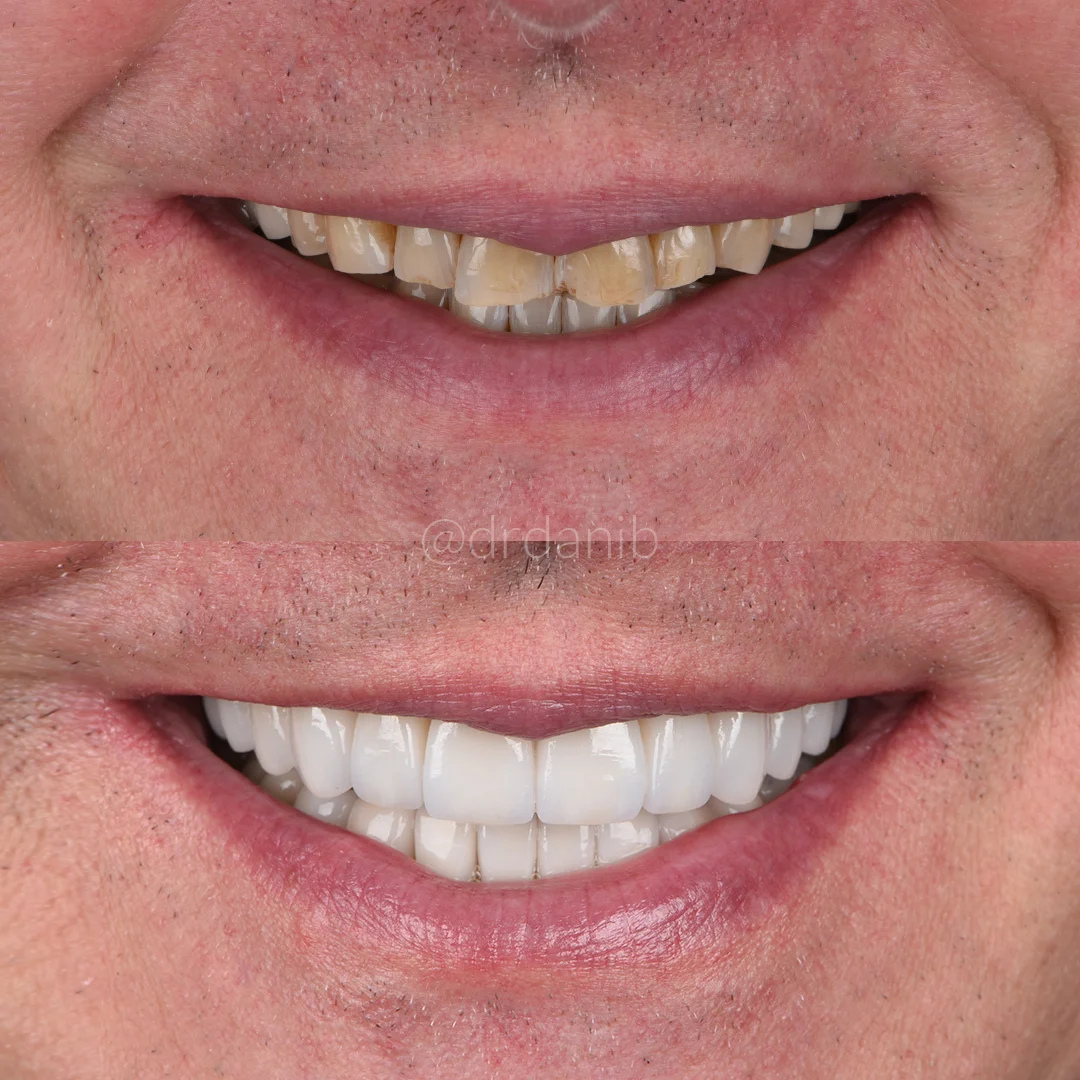
• Teeth with discoloration that does not respond adequately to whitening
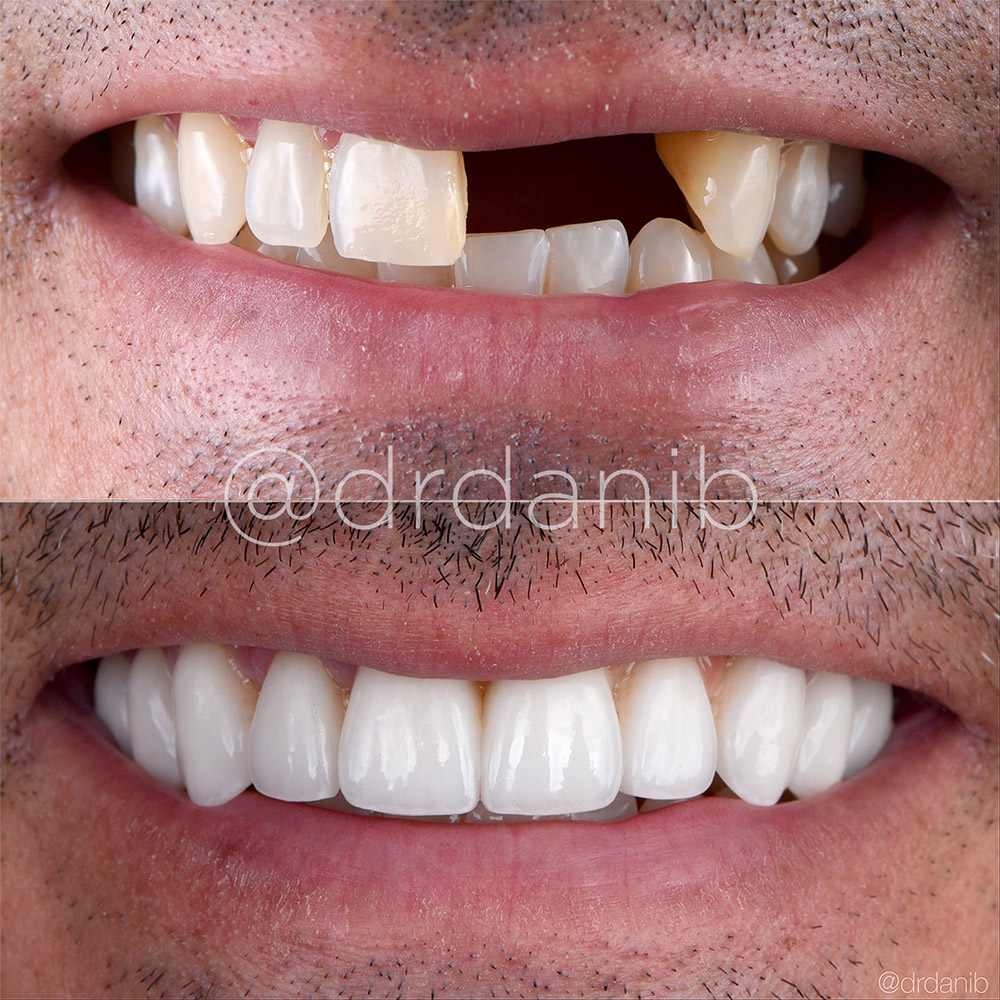
• Chipped, cracked, or worn tooth edges
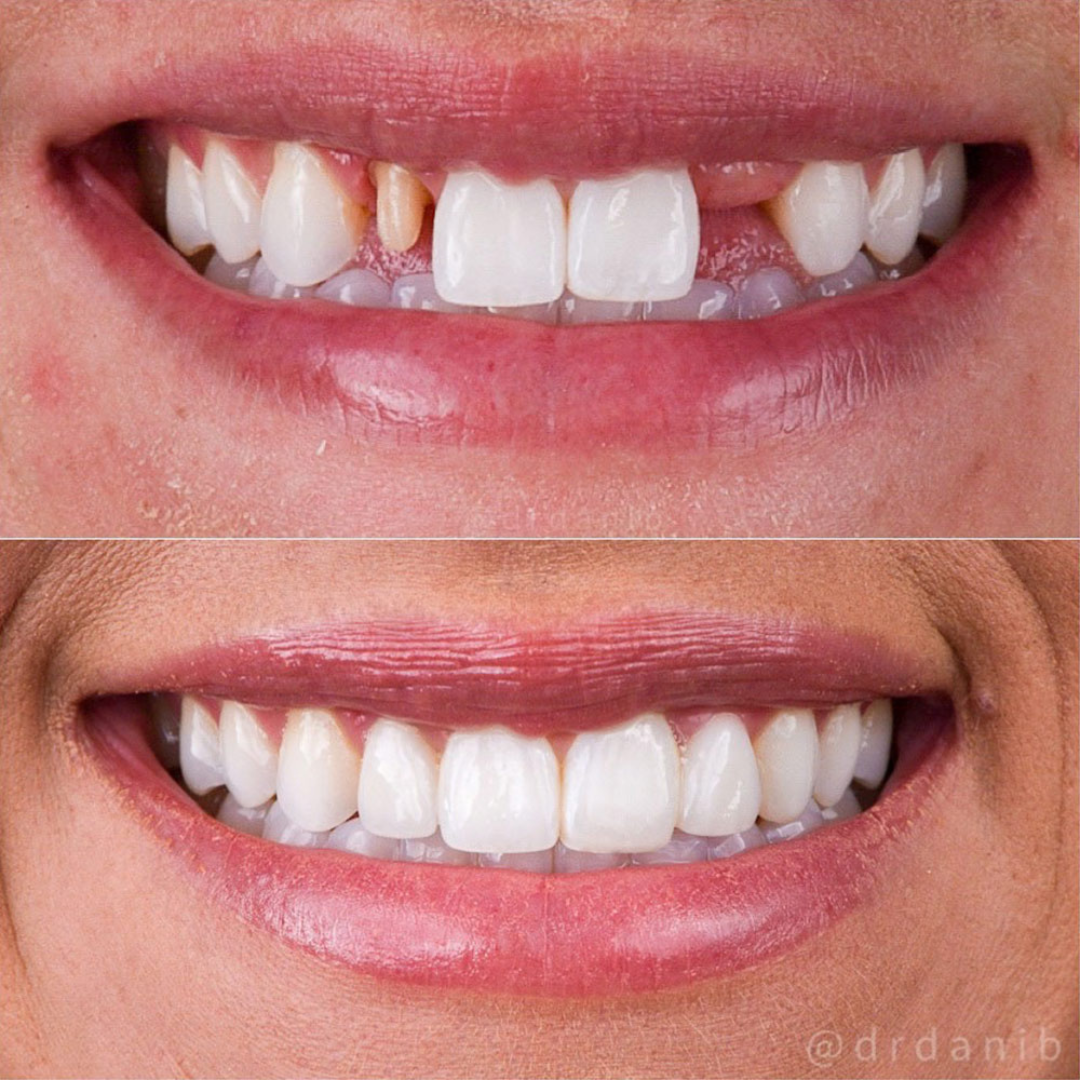
• Small gaps between teeth
• Teeth that appear too small, short, uneven, or misshapen
• Uneven surfaces or proportions
• Certain mild alignment concerns when orthodontic movement is not required
Veneers do not physically move teeth or correct every bite problem. Patients with significant crowding, active gum disease, untreated decay, or certain bite conditions may need other treatment before veneers are considered.
- Misshapen Teeth
- Cracked Chipped Teeth
- Worn Edges
- Spaces / Gaps
- Discoloration & Stains
- Uneven Surfaces
Last Updated: 10-19-2026
Porcelain veneers are thin, custom ceramic shells bonded to the front of selected teeth to change their color, shape, size and spacing. Dr. Dani B. designs each case with an in-house ceramist at his office at 10700 Santa Monica Blvd, Suite 301, Los Angeles, near Century City and Beverly Hills. Porcelain veneers at the practice cost about $1,900–$3000 per tooth, and treatment usually takes three visits over 5–7 weeks.
| Best for | Stains whitening can’t fix, chips, worn edges, small gaps, uneven or misshapen teeth |
|---|---|
| Not for | Moving teeth, crowding or bite problems, active decay or gum disease |
| Options | Traditional, minimal-prep and no-prep veneers (when clinically appropriate) |
| Fee | About $1,900– $3,000 per tooth; personalized estimate after your exam |
| Timeline | 3 visits over 5–7 weeks; expedited about 2 weeks (extra fee) |
| Who makes them | An in-house ceramist working with Dr. Dani B. |
| Insurance | Usually not covered (cosmetic); financing through CareCredit, Proceed Finance and Cherry |
| Location | 10700 Santa Monica Blvd, Suite 301, Los Angeles, CA 90025 · (310) 910-9950 |
Getting to the Santa Monica Boulevard Office From Los Angeles and Beverly Hills
| Monday – Wednesday | 8:00 AM – 5:00 PM |
|---|---|
| Thursday | 9:30 AM – 4:00 PM |
| Friday | 8:00 AM – 3:00 PM |
| Saturday – Sunday | By appointment only |
Phone: (310) 910-9950 · Get directions
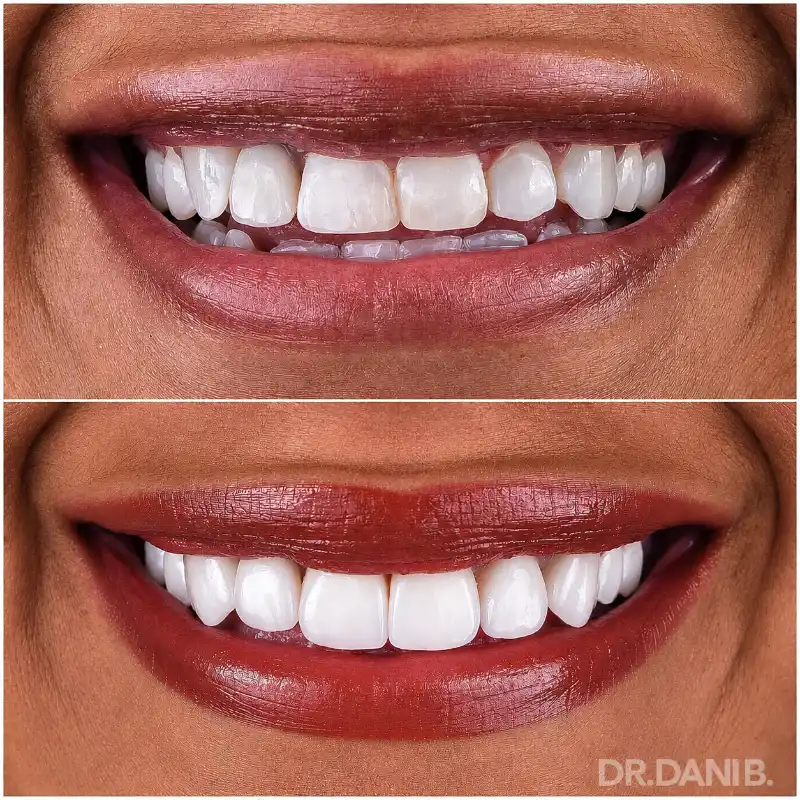
Porcelain Veneers Before and After, These are real patients of Dr. Dani B. Results vary from person to person.
Choosing who designs your veneers matters as much as choosing the treatment because the result depends on planning, artistry, and follow-through. Patients tend to choose Dr. Dani B. for a combination of clinical training, an in-house ceramist, and a process that lets them preview the smile before anything is made permanent.
- Education and training: Dr. Dani B. earned his undergraduate degree from UCLA and his dental degree from the NYU College of Dentistry.
- Professional memberships: He is a member of the American Dental Association, the American Academy of Cosmetic Dentistry, and the California Dental Association.
- Conservative philosophy: His approach is intentionally conservative and minimalistic, which favors preserving healthy enamel when the case allows.
- Facial aesthetic planning: Veneers are designed to suit your lips, smile line, and facial proportions, not just a single tooth.
- In-house ceramist: An in-house ceramist works directly with Dr. Dani B. to customize the shape, shade, surface texture, translucency, and fit of each veneer.
- Digital scanning for treatment planning: The office uses iTero digital scanning to capture detailed records that support smile planning and communication with the in-house ceramist.
- A preview before it is permanent: A digital design, wax up, mock up, or temporary trial smile can help you evaluate the look before the final porcelain is bonded.
- Comprehensive treatment planning: Because the practice also provides restorative and preventive care, alternatives are discussed honestly when they would preserve more tooth structure or serve you better.
Why Los Angeles and Beverly Hills Patients Choose Dr. Dani B. for Porcelain Veneers
Why Patients Choose Dr. Dani B. for Porcelain Veneers
- Education: Undergraduate degree from UCLA; dental degree from the NYU College of Dentistry.
- Memberships: American Dental Association, American Academy of Cosmetic Dentistry, California Dental Association.
- Conservative approach: Saves as much healthy enamel as each case allows.
- Designed for your face: Veneers are planned around your lips, smile line and facial proportions.
- In-house ceramist: Shape, shade, texture and fit are customized in the same office.
- Digital scanning: iTero scans support planning and communication with the ceramist.
- Preview first: A digital design, mock-up or temporary trial smile lets you see the look before anything is permanent.
- Honest alternatives: The practice also does restorative and preventive care, so veneers are recommended only when they fit.
Your Veneers Are Made In-House
Your veneers are shaped and layered by Dr. Dani B. in house master ceramist, who works in the same office as Dr. Dani B. can be checked in person at your try-in, adjustments don’t need a trip to an outside lab, and the person building your veneers has seen your smile. Meet the ceramist
“I had my veneers done by Dr. Dani Benyaminy, and I couldn’t be happier with the results. He is incredibly skilled, detail-oriented, and truly cares about creating a natural, beautiful smile. The staff is amazing: friendly, professional, and very attentive, which made the entire experience comfortable and stress-free. From start to finish, everything was smooth and well organized. I love my new smile and would definitely recommend Dr. Benyaminy and his wonderful team!”
What Porcelain Veneers Can and Cannot Fix
Porcelain veneers are thin ceramic shells bonded to the front of selected teeth. They primarily change the visible color, shape, size, and proportion of those teeth. Veneers do not move teeth or correct an underlying bite problem, so orthodontic or restorative treatment may be more appropriate when function or alignment needs correction. For selected cosmetic concerns, veneers may create a meaningful change, although results vary according to the starting teeth, treatment plan, and ongoing care.
Stains and Discoloration
When teeth are stained or discolored in a way that does not respond well to whitening, veneers can cover the front surface with a shade chosen during smile design. Shade planning accounts for the surrounding natural teeth, since veneers cannot be whitened after they are placed.
Chips, Cracks, and Worn Edges
Veneers can reface chipped, cracked, or worn front teeth when enough healthy tooth structure remains to support bonding. If a tooth is heavily damaged or extensively restored, Dr. Dani B. may recommend a crown or another option instead.
Size, Shape, and Proportion
Teeth that look short, narrow, or out of proportion with the rest of the smile can be reshaped with veneers, and the number of veneers is planned around symmetry and how the teeth blend with those left untreated.
Gaps and Minor Alignment
Small gaps and minor visual misalignment can often be improved cosmetically with veneers. Veneers do not move teeth the way braces or clear aligners do, so when the bite or alignment needs real correction, orthodontic treatment such as Invisalign may be the better path.
“Outstanding work on my veneers. Huge improvement for my look and I smile more. Highly recommended.”
Who Is a Candidate for Porcelain Veneers?
Porcelain veneers are elective and long-term, so candidacy is determined through a clinical evaluation rather than assumed. During a consultation, Dr. Dani B. examines the teeth and gums, evaluates the bite, takes photographs and a digital scan, and reviews X-rays when clinically indicated. He then discusses the patient’s goals, available alternatives, and what veneers may realistically achieve.
You may be a good candidate if you:
- Are an adult seeking a cosmetic change to the visible front teeth
- Have generally healthy teeth and gums with enough tooth structure for bonding
- Have staining, chips, wear, shape, spacing, or minor alignment concerns that can be improved without compromising oral health
- Understand that veneers are elective, long term, and may need future repair or replacement
- Are willing to maintain daily oral hygiene, regular dental visits, and a night guard when it is recommended
Some conditions are usually addressed first:
- Untreated decay, gum disease, or an active infection
- Insufficient enamel or a weak, heavily restored tooth that may need a crown
- Significant crowding or a bite problem better managed with orthodontics
- Clenching or grinding, which may call for careful planning and a protective appliance
- Expectations that a set of veneers can guarantee a perfect result
The Porcelain Veneer Process, Step by Step
Dr. Dani B. plans porcelain veneers across a series of visits so that you can see and feel the design before it becomes permanent. The timeline below is typical and can change with the complexity of the case, the number of teeth, and laboratory workflow.
How the Porcelain Veneer Process Works
- Consultation and smile design (visit 1). Exam, photos, iTero digital scan and X-rays when needed. You review a smile design and get an estimate. Virtual consults are available for out-of-town patients.
- Preparation and trial smile (visit 2, about 2–3 weeks later). Teeth are prepared as your plan requires. Temporary veneers act as a test drive so you can check shape, length and speech.
- Try-in and bonding (visit 3, about 3–4 weeks later). You and Dr. Dani B. approve the fit, shape and shade before the veneers are bonded and your bite is adjusted.
- Follow-up. Your bite, gums and comfort are checked. A night guard is made if you clench or grind.
Need it faster? Expedited scheduling can shorten each step to about 5 business days, depending on your case and lab timing (extra fee applies). Same-day final veneers are not offered.
Full details: The Porcelain Veneer Process
Traditional, No-Prep, and Composite Veneers
Traditional porcelain veneers usually remove a small amount of enamel so the veneer sits naturally and resists stains. No-prep and minimal-prep veneers use thinner ceramic and remove little or, in selected cases, no enamel.
They aren’t right for every smile. Heavy discoloration, teeth that already stick out, or larger alignment problems can make traditional veneers or another treatment a better choice.
Composite veneers use tooth-colored resin. They cost less, take fewer visits and are easier to repair, but they stain and wear sooner than porcelain. Learn more about no-prep veneers in Los Angeles.
| Treatment | Often used for | Moves teeth? | Keep in mind |
|---|---|---|---|
| Porcelain veneers | Color, shape, proportions, gaps and minor visual alignment | No | Some enamel may be removed |
| Composite bonding | Small chips, gaps or shape changes | No | Less invasive, but stains and chips sooner |
| Invisalign | Crowding, spacing, tooth position and some bite issues | Yes | Takes longer than veneers |
| Dental crowns | Badly damaged teeth or large fillings | No | Covers the whole tooth |
| Teeth whitening | Overall tooth color | No | Doesn’t change shape or spacing |
The right choice depends on whether your concern is color, shape, position, tooth strength or a mix. Dr. Dani B. explains the options that fit your exam.
The Cost of Porcelain Veneers in Los Angeles
How Much Do Porcelain Veneers Cost in Los Angeles?
Porcelain veneers at Dr. Dani B.’s office cost about $1,900–$3000 per tooth. Published Los Angeles averages run roughly $1,500–$3,500 per tooth. Most smile makeovers treat 6–8 upper teeth.
| Number of veneers | Estimated total |
|---|---|
| 1 (one chipped or dark tooth) | $1,900–$3,000 |
| 4 (front four teeth) | $7,600–$10,000 |
| 6 (upper smile line) | $11,400–$15,000 |
| 8 (wide smile) | $15,200–$20,000 |
Your final fee depends on the number of teeth, the veneer type and any treatment needed first. You get a personalized estimate after your exam. Insurance usually doesn’t cover cosmetic veneers. The office accepts major credit cards and offers financing through CareCredit, Proceed Finance, Cherry and in-office payment plans.
More detail: Porcelain veneers cost in Los Angeles
Replacing Old Veneers
Some patients come to Dr. Dani B. to replace veneers placed elsewhere that have chipped, stained at the edges, come loose or look bulky. Replacement starts with the same exam and smile design as a first set. The old veneers are removed, your teeth and gums are checked, and new veneers are designed with the in-house ceramist. Teeth that were heavily prepared before may need crowns instead.
Meet Dr. Dani B., Your Los Angeles Cosmetic Dentist
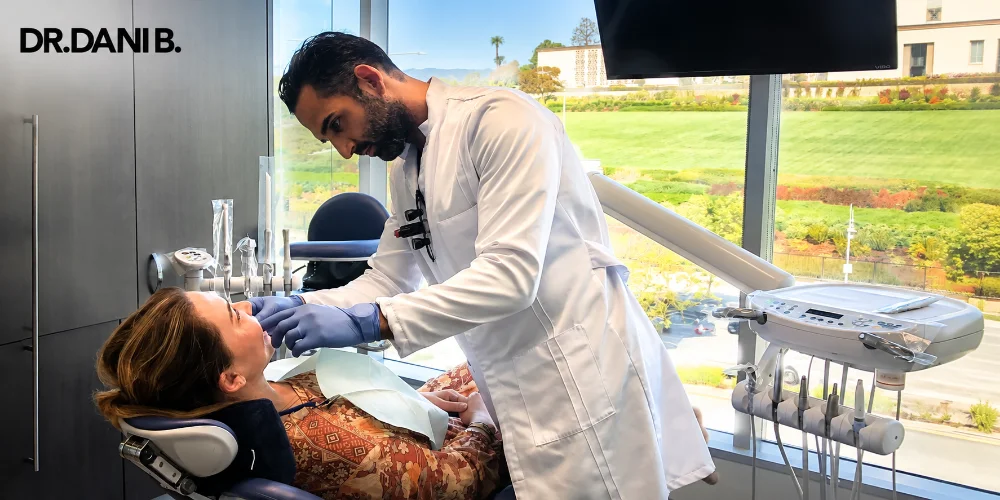
Dr. Dani B. (Dani Benyaminy, DDS) is a California native who earned his undergraduate degree at UCLA and his dental degree at the NYU College of Dentistry. He is a member of the ADA, the American Academy of Cosmetic Dentistry and the California Dental Association.
His veneer work is conservative and planned around the whole face, not one tooth at a time. Working with an in-house ceramist and iTero digital scanning, he designs smiles for local families and for camera-facing professionals who depend on their smile at work.
“I had veneers done by Dr. Dani and couldn’t be happier with my experience. The process was not easy for me due to anxiety, but Dr. Dani was incredibly kind, patient, and understanding throughout the entire treatment. He took the time to explain everything and made sure I felt comfortable every step of the way. I truly felt cared for and supported. I highly recommend Dr. Dani to anyone, especially if you feel nervous about dental work.”
Caring for Your Veneers
Porcelain veneers can last many years, but no lifespan is guaranteed. To protect them:
- Brush with a soft brush and non-abrasive fluoride toothpaste, and clean between teeth daily.
- Don’t bite ice, pens, nails or packaging.
- Wear a night guard if you clench or grind.
- Keep regular cleanings and exams so the edges and gums stay healthy.
- Call the office if a veneer chips, feels loose or becomes sensitive.
Book Your Porcelain Veneers Consultation
Call (310) 910-9950 or request a consultation online. At your visit, Dr. Dani B. reviews whether veneers are right for you, how many you may need, your alternatives and a personalized estimate. Out of town? Ask for a virtual consultation.
- Transform Your Smile
- Boost Your Self-Confidence
- Improve Your Oral Health
- Achieve Long-Lasting Results
Porcelain Veneers by Dr. Dani B.
Porcelain veneers are the top choice of on-camera celebrities for a reason: they’re a permanent solution for a glowing, flawless smile. Dr. Dani B. specializes in expertly crafting the best tailored porcelain veneers for any conditions or issues. The result is a brilliant smile that will positively impact your appearance and in many cases, change your life for the better.
The veneers themselves are made from porcelain and provide a natural looking cover that matches your teeth. Known for being remarkably realistic, porcelain veneers reflect light like natural teeth and are specially designed by Dr. Dani B. to fit your smile.
Dr. Dani B. is a renowned expert in porcelain veneers. Patients across the country trust his years of training, experience, and state-of-the-art techniques. If you are interested in a lifetime of beautiful, white teeth with porcelain veneers:

Porcelain Veneers in Los Angeles
Last Updated:9-15-2026
Porcelain veneers are thin, custom-made ceramic shells bonded to the front of selected teeth to improve their color, shape, size, spacing, and overall appearance. Dr. Dani B. provides personalized porcelain veneers in Los Angeles using a conservative, facial-aesthetic approach designed to create balanced, natural-looking results. A consultation is required to evaluate your teeth, gums, bite, and treatment goals.
PORCELAIN VENEERS: QUICK FACTS
Best for: Stains, chips, gaps, worn edges, uneven teeth, misshapen teeth, and certain minor alignment concerns
Available options: Traditional, minimal-prep, and no-prep veneers when clinically appropriate
Published price range: Approximately $1,900-$3,000 per tooth
Treatment location: 10700 Santa Monica Blvd, Suite 301, Los Angeles, CA 90025
Consultation required: Yes. Veneers are not appropriate for every patient. Request a Porcelain Veneers Consultation
Veneers are thin, custom-made porcelain shells which are bonded to the teeth’s front surface to improve their appearance. They can be used to address many cosmetic dental issues, including:
- Discoloration: Veneers can cover stains or discoloration that doesn’t respond to teeth whitening treatments.
- Chips or cracks: Veneers can repair chipped or cracked teeth, giving them a more aesthetically pleasing appearance.
- Gaps or misalignment: Veneers can be used to close gaps between teeth or correct minor misalignments.
- Size and shape: Veneers can help improve teeth’s size and shape, creating a more balanced smile.
Dr. Dani B. is a skilled cosmetic dentist who expertly crafts personalized porcelain veneers to meet your specific needs. Veneers in Los Angeles are a popular cosmetic dental procedure that can dramatically enhance your smile. They offer a durable and long-lasting solution for several dental concerns. Check out our patient reviews.

The Veneer Procedure
Consultation
- Initial assessment: First, you’ll meet with Dr. Dani B. to discuss your goals for your smile and determine if veneers are a suitable option.
- Dental examination: He will thoroughly examine your teeth, gums, and overall oral health to assess your suitability for veneers and identify any potential underlying issues.
- Discussion of expectations: Then, he will explain the veneer process in detail, including the potential benefits, risks, and expected outcomes. He’ll also discuss the cost, the number of appointments required, and any necessary preparation steps.
Can Porcelain Veneers Look Natural?
Yes. Well-designed porcelain veneers can closely resemble natural tooth enamel. A natural result depends on more than selecting a white shade. The shape, translucency, texture, edge design, tooth proportions, gumline, and relationship between the teeth and face must all be considered.
Dr. Dani B. plans each case around the patient’s facial features, smile, existing teeth, and personal preferences. The goal is not to give every patient the same smile. It is to create a result that looks balanced, individual, and appropriate for that patient.
A natural veneer should not automatically look bulky, opaque, or excessively white. During your consultation, discuss the shade, shape, texture, and level of brightness you prefer.
| Treatment | Often Considered For | Moves Teeth? | Important Consideration |
|---|---|---|---|
| Porcelain veneers | Color, shape, proportions, gaps, and certain minor visual alignment concerns | No | Some enamel modification may be necessary |
| Composite bonding | Small chips, gaps, or localized shape changes | No | Usually less invasive, but may stain or chip sooner |
| Invisalign | Crowding, spacing, tooth position, and certain bite concerns | Yes | Treatment typically takes longer than veneers |
| Dental crowns | Teeth with significant structural damage or large restorations | No | Covers more of the tooth than a veneer |
| Teeth whitening | General tooth discoloration | No | Does not change tooth shape, spacing, or position |
The right option depends on whether the concern involves tooth color, tooth shape, tooth position, tooth structure, or a combination of these factors.
Dr. Dani B. will explain the benefits, limitations, and alternatives relevant to your examination.
Who Is a Good Candidate for Porcelain Veneers?
A good candidate for porcelain veneers generally has healthy teeth and gums, sufficient enamel for predictable bonding, realistic expectations, and cosmetic concerns that veneers can address.
You may be a candidate if you want to improve tooth color, shape, spacing, symmetry, or visible wear. However, veneers may not be the first treatment recommended when a patient has active gum disease, untreated tooth decay, insufficient enamel, severe crowding, significant bite problems, or uncontrolled teeth grinding.
A clinical examination is necessary before determining whether traditional veneers, minimal-prep veneers, no-prep veneers, orthodontics, bonding, crowns, or another treatment would be most appropriate.
The Veneer Procedure
What Is the Porcelain Veneer Process?
The porcelain veneer process is customized for each patient, but it generally includes the following steps:
- Consultation and examination
Dr. Dani B. evaluates your teeth, gums, bite, smile, facial proportions, and cosmetic goals. Photographs, scans, or impressions may be taken when appropriate.
- Smile planning
The desired tooth proportions, shapes, shade, texture, and overall smile design are discussed. Patients should explain whether they want a subtle improvement or a more noticeable transformation.
- Tooth preparation
Depending on the selected veneer type and the position of the teeth, a conservative amount of enamel may be modified. Some patients may qualify for minimal-prep or no-prep veneers.
- Temporary veneers
Temporary veneers may be used while the final restorations are being created. This stage can help evaluate general shape, length, and appearance.
- Final placement
The final veneers are evaluated for fit, shade, proportions, and appearance before they are bonded to the teeth.
- Follow-up
The bite, comfort, oral hygiene, and overall result are reviewed after placement.
Consultation
- Initial assessment: First, you’ll meet with Dr. Dani B. to discuss your goals for your smile and determine if veneers are a suitable option.
- Dental examination: He will thoroughly examine your teeth, gums, and overall oral health to assess your suitability for veneers and identify any potential underlying issues.
- Discussion of expectations: Then, he will explain the veneer process in detail, including the potential benefits, risks, and expected outcomes. He’ll also discuss the cost, the number of appointments required, and any necessary preparation steps.
Preparation
- Tooth preparation: Depending on the current position of your teeth and desired aesthetic result, minimal to no preparation is required to create a smooth surface for the veneers to be bonded to.
- Local anesthesia: A local anesthetic will be used to numb the area around your teeth, making the procedure comfortable and pain-free.
- Bite evaluation: He will take impressions of your bite to ensure that the veneers will fit properly and align with your opposing teeth.
Impressions
- Digital or traditional impressions: Dr. Dani B. will take impressions of your teeth to create a model that will be used to fabricate your custom veneers. This can be done using traditional impression materials or with digital scanning technology.
- Bite registration: He may also take a bite registration to ensure that the veneers will fit properly and align with your opposing teeth.
Temporary Veneers
- Temporary restoration: While your permanent veneers are being fabricated, you may be given temporary veneers to wear. These temporary veneers will help protect your teeth and maintain your smile’s appearance during the fabrication process.
- Comfort and aesthetics: Temporary veneers can also help you get used to the feeling of having additional material on your teeth.
Bonding
- Try-in and Final placement: Once your permanent veneers are ready, they will be bonded to your teeth using a special dental cement. The cement will be cured with a special light, ensuring a strong and durable bond.
- Fine-tuning: Dr. Dani B. may make minor adjustments to the veneers to ensure a comfortable and natural-looking fit.
Adjustments
- Bite evaluation: Dr. Dani B. will evaluate your bite to ensure proper alignment and function.
- Additional adjustments: If necessary, he may make additional adjustments to the veneers to ensure a comfortable and aesthetically pleasing result.
How Much Do Porcelain Veneers Cost in Los Angeles?
Dr. Dani B.’s currently published price range for porcelain veneers is approximately $1,900-$3,000 per tooth. The final cost depends on the number of veneers, the complexity of the case, the materials selected, preparatory treatment, and the details of the treatment plan.
Because every smile and treatment plan is different, an examination is required before an exact fee can be provided. Cosmetic veneers are commonly considered elective treatment, so insurance coverage may be limited.
Learn more about porcelain veneer costs in Los Angeles.
Porcelain Veneers Near Century City and Westwood
Dr. Dani B.’s Los Angeles dental office is located at 10700 Santa Monica Blvd, Suite 301, Los Angeles, CA 90025, near Century City and Westwood.
The practice provides cosmetic dentistry consultations for patients from Los Angeles, Beverly Hills, Santa Monica, Westwood, Century City, and surrounding communities. The practice also works with patients traveling to Los Angeles for cosmetic dental treatment. Treatment availability, scheduling, and travel requirements should be discussed before making travel arrangements.
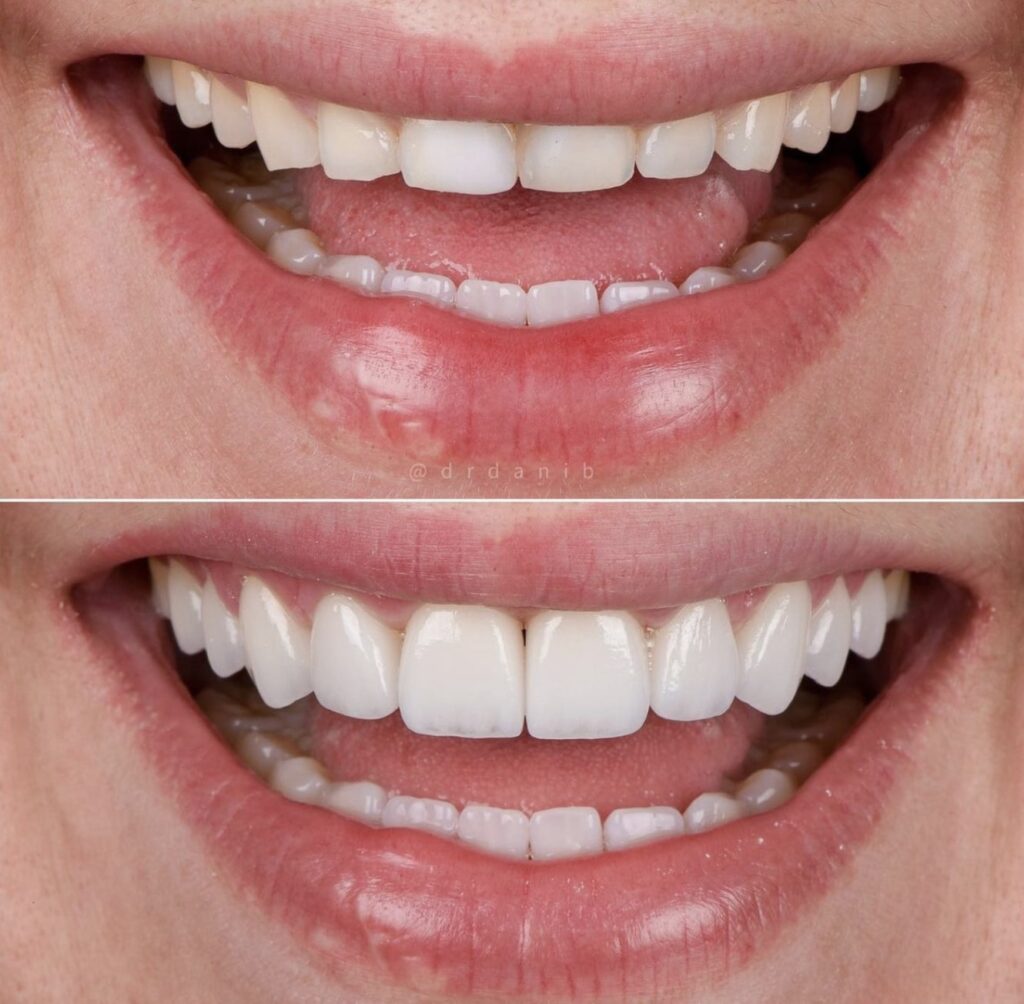
Benefits of Veneers
Veneers in Los Angeles offer numerous benefits for those seeking to improve their smile. Here are some of the key advantages:
- Enhanced appearance: Veneers can dramatically improve the overall appearance of your smile by addressing a variety of aesthetic concerns.
- Durability: Veneers are made from durable materials, such as porcelain or composite, that can last for many years with proper care.
- Stain resistance: Porcelain veneers are highly resistant to stains, making them an excellent choice for individuals who enjoy coffee, tea, or red wine.
- Natural-looking results: Veneers can be customized to match the color, shape, and size of your natural teeth, resulting in a seamless and natural-looking smile.
- Improved self-esteem: A beautiful smile can boost your confidence and self-esteem.
Also Read: Keeping Your Porcelain Veneers Radiant: Tips for Maintaining Their Color
Types of Veneers
Dental veneers are available in various types, each with its unique characteristics. Porcelain, composite, No-Prep, and temporary removable veneers are common options. The ideal choice for you will depend on your specific needs and preferences.
Composite veneers are crafted from a resin material that is bonded to the front surface of teeth. While they are generally more affordable than porcelain veneers in Los Angeles, they might not be as durable or stain-resistant.
Porcelain veneers are made from a thin, durable ceramic material that is also bonded to the front surface of teeth. Renowned for their natural appearance, stain resistance, and durability, porcelain veneers are a popular choice.
No-Prep veneers require minimal to no tooth preparation compared to traditional veneers. This makes them an attractive option for individuals seeking to improve their smile without sacrificing a significant amount of tooth structure.
Removable dental veneers are less common than traditional fixed veneers. They are often used for temporary cosmetic purposes or as an alternative for those who prefer a more reversible option.
No-Prep Veneers: A Closer Look
No-prep veneers in Los Angeles offer a less invasive alternative to traditional veneers, but it’s necessary to understand the potential benefits and drawbacks before making a decision.
Benefits of No-Prep Veneers
- Minimal to no tooth preparation: One of the primary advantages of no-prep veneers is that they require minimal or no removal of tooth enamel. This preserves more of your natural tooth structure, reducing the risk of sensitivity and future dental issues.
- Quicker procedure: The process for applying no-prep veneers is often shorter than traditional veneers, making it a more convenient option for those with busy schedules.
- Less sensitivity: Because less tooth structure is removed, there’s a lower risk of post-procedure sensitivity. This can be particularly beneficial for individuals with sensitive teeth.
- Reversible: In some cases, no-prep veneers can be removed without damaging your teeth. This can be advantageous if you’re unsure about the long-term results or if your dental needs change.
Potential Drawbacks of No-Prep Veneers
- Longevity: No-prep veneers may not be as durable as traditional veneers and may need to be replaced more frequently. The lifespan can vary depending on individual factors, such as your oral hygiene habits and how you care for your veneers.
- Bond strength: The bond between no-prep veneers and your teeth may not be as strong as with traditional veneers. This increases the risk of them becoming dislodged or chipped, especially if you don’t follow proper care instructions.
- Cosmetic limitations: No-prep veneers may not be suitable for all cosmetic issues. For example, they may not be able to address severe discoloration or large gaps between teeth. In such cases, traditional veneers or other dental procedures may be more appropriate.
Minimal Prep Veneers
Minimal prep veneers in Los Angeles offer a less invasive alternative to traditional veneers. While primarily used for aesthetic purposes, they also have medical implications.
Medical Benefits of Minimal Prep Veneers
- Preservation of tooth structure: By removing minimal enamel, minimal prep veneers help preserve more of your natural tooth structure. This can be beneficial for individuals with weakened or sensitive teeth.
- Improved bite function: In some cases, misaligned teeth can contribute to bite problems. Minimal prep veneers can help correct minor alignment issues, improving your bite function and reducing strain on your jaw joints.
- Enhanced speech: Misaligned teeth can sometimes affect speech clarity. By improving alignment, minimal prep veneers can help enhance your speech.
- Prevention of tooth wear: Misaligned teeth can cause uneven wear and tear, leading to premature tooth damage. Minimal prep veneers can help address alignment issues and prevent excessive wear.
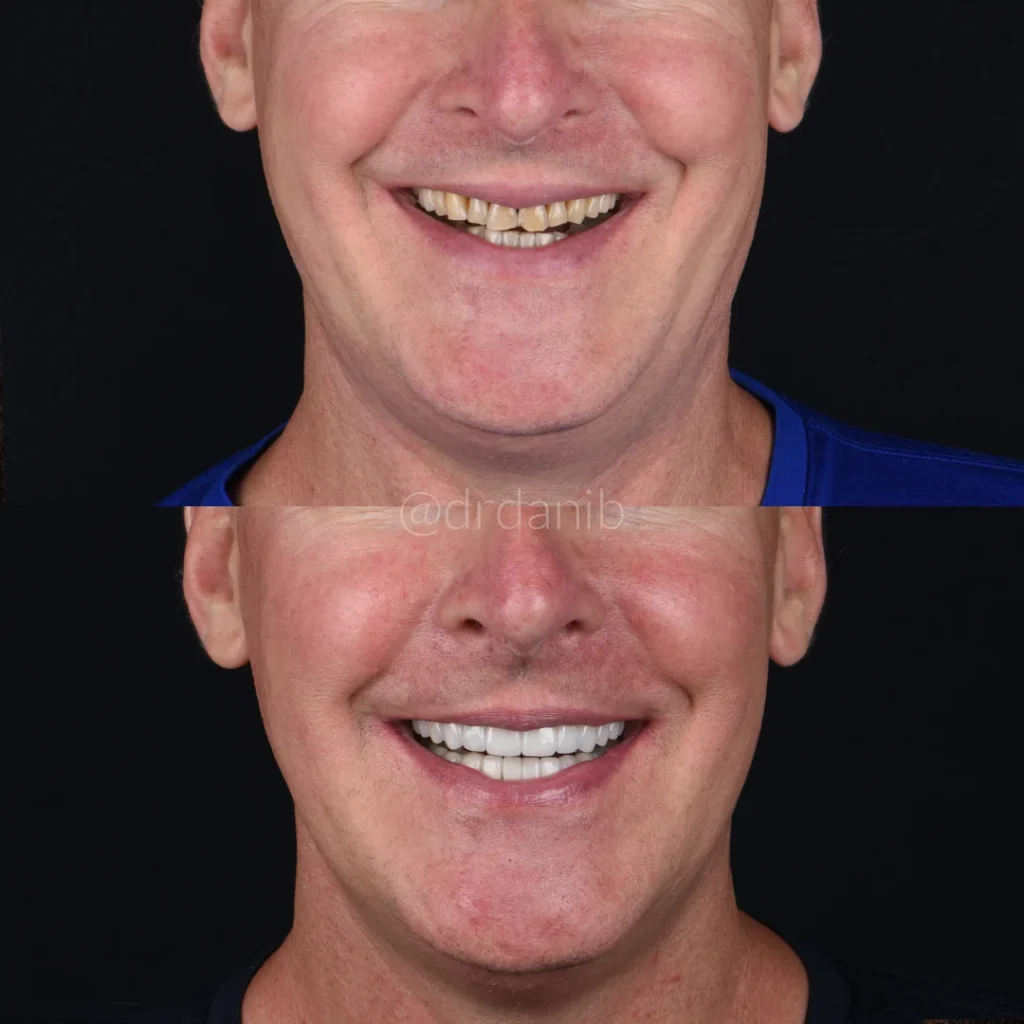
Medical Considerations
- Oral health: It’s important to have good oral health before undergoing any dental procedure, including minimal prep veneers. Gum disease or other dental issues should be addressed prior to treatment.
- Allergies: Some people may have allergies to the materials used in veneers. It’s necessary to inform us about any known allergies.
- Bite analysis: We’ll need to conduct a thorough bite analysis to ensure that minimal prep veneers will improve your bite function and prevent any potential issues. In some cases, you may need to visit an orthodontist in Los Angeles.
Pros and Cons
Dental veneers offer several benefits, including improved appearance, durability, stain resistance, natural-looking results, and enhanced self-esteem. However, there are also potential drawbacks to consider. The cost of porcelain dental veneers in Los Angeles can be significant, and the procedure sometimes requires some tooth preparation, which may lead to sensitivity. Additionally, there is a risk of veneers becoming dislodged or chipped.
While the preparation of your teeth for veneers may involve removing a thin layer of enamel, with proper care, veneers can help to protect your teeth from further damage. It’s important to note that dental veneers are not a permanent solution. They may need to be replaced over time due to wear and tear or other factors. The lifespan of veneers can vary depending on individual factors, such as your oral hygiene habits and how you care for your veneers.
Aftercare and Concerns
To ensure the longevity of your dental veneers, follow these tips:
- Practice excellent oral hygiene by brushing your teeth twice a day with a soft-bristled toothbrush and flossing daily.
- Avoid biting hard objects that could damage or chip your veneers. Limit your consumption of stain-causing substances such as coffee, tea, red wine, and other staining beverages.
- Avoid grinding your teeth, as this can put excessive stress on your veneers.
- If you have bruxism, talk to us about a nightguard.
- Finally, you may have to see Dr. Dani B. regularly for check-ups to monitor the health of your veneers and address any issues promptly.
Contact Dr. Dani B. immediately if you experience severe pain or discomfort, a broken or chipped veneer, a loose veneer, changes in the color or appearance of your veneers, or sensitivity around your teeth. By following these guidelines and seeking prompt dental care, you can help to maintain the health and appearance of your dental veneers for many years to come.
With proper care, veneers can last for many years. Porcelain veneers are known for their durability and can last up to 15 years or longer. Composite veneers may not be as durable and may need to be replaced more frequently. However, the lifespan of veneers also depends on individual factors, such as your oral hygiene habits and how you care for your veneers.
Veneers are generally considered safe and effective cosmetic dentistry in Los Angeles. However, there are some potential risks involved. The preparation of your teeth for veneers may cause some sensitivity. There’s also a risk of veneers becoming dislodged or chipping, especially if you don’t follow proper aftercare instructions. In rare cases, veneers may need to be replaced due to wear and tear or other issues.
Why Patients Choose Dr. Dani B. for Porcelain Veneers
Porcelain veneers require both clinical planning and aesthetic judgment. Dr. Dani B. evaluates how the teeth relate to the patient’s lips, gums, smile, bite, and facial features before recommending treatment.
His educational background includes undergraduate studies at UCLA and dental training at the New York University College of Dentistry. His approach emphasizes personalized smile design, conservative treatment planning, and natural-looking proportions.
During a consultation, patients can review relevant before-and-after cases, discuss treatment alternatives, and explain the specific characteristics they want – or do not want – in their new smile.
Veneers FAQ
- Misshapen teeth
- Cracked or chipped teeth
- Worn edges
- Spaces/gaps
- Discoloration and stains
- Uneven surfaces
Compared to other dental treatments, recovery after getting your veneers is quite fast. After the veneers are permanently bonded and the anesthetic wears off, you should be able to eat and chew normally. If the surface of the veneers feels a little rough, it’s usually because the extra cement has escaped. This should wear down naturally in a few days of brushing and eating, but if not, contact your cosmetic dentist to smooth them out.
Porcelain veneers can last many years, but their lifespan varies according to oral hygiene, bite forces, grinding habits, diet, veneer design, and regular dental care. Veneers are not considered permanent for life and may eventually require repair or replacement.
Yes, Porcelain veneers can be repaired, depending on the extent of the damage. Here are common scenarios and their solutions:
- Minor Chips or Cracks: Polishing or adjustment of the veneers can be done to hide or reduce minor chips or cracks. I would depend on the size and location of the chip or crack. Sometimes we can bond resin to restore the damged area.
- Repolishing: Using special veneer polishing discs we can restore the shine and smooth surface of a veneer.
- Replacement: If the veneer is damaged beyond repair it would need to be replaced with a new hand crafted veneer that is made to match the previous veneer and/or surrounding veneers.
- Rebonding: If a veneer debonds or “pops off” but remains intact ,it may be possible to reattach it after cleaning and preparing the surface.
- Examination + X-rays
- Photographs taken for initial smile design presentation
- Questions and discussion of procedures + outcomes
- Proposal for porcelain veneers cost and available payment options
- Digital Scan for Smile Design and wax up
- Review Smile Design
- Prepare teeth for placement of temporary veneers.
- Placement of temporary veneers to reveal final aesthetic result.
- Evaluate aesthetics and make any needed revisions.
- Try-in and Placement of Custom Porcelain Veneers
- Review and placement of porcelain veneers
- Approval of final design and color
- Permanent cementation of porcelain veneers
- Visit Two- 5 business days
- Visit Three- 5 business days
Unfortunately, insurance does generally not cover cosmetic procedures. In rare instance we may be able to obtain approval from insurance for cosmetic procedures when the plan allows for it.
- Expertise in Smile Design: Dr. Dani’s passion for enhancing smiles ensures veneers that look natural and complement your features.
- Personalized Approach: Every veneer is customized to your needs, delivering a tailored, beautiful result.
- In-House Ceramist: With an on-site ceramist, Dr. Dani ensures precise craftsmanship and real-time adjustments for a flawless finish.
- Advanced Technology: State-of-the-art materials and techniques guarantee high-quality, long-lasting veneers.
- Comprehensive Care: Dr. Dani prioritizes patient comfort and communication throughout the entire process.
Veneers are thin, cosmetic coverings that are bonded to the front surface of teeth, while crowns are full-coverage restorations that cover the entire tooth. Crowns are typically used to restore damaged or weakened teeth, while veneers are primarily used for cosmetic purposes.
Porcelain and composite are the two main types of materials used for veneers. Porcelain veneers are highly durable, stain-resistant, and offer a very natural-looking appearance. They are often considered the preferred choice for veneers. Composite veneers are made from a resin material and are generally less expensive than porcelain veneers. However, they may not be as durable or as stain resistant as porcelain veneers.
The veneer process itself is generally not painful. Dr. Dani B. will use a local anesthetic to numb the area around your teeth during the preparation and bonding procedures. However, you may experience some sensitivity in the days following the procedure, especially if your teeth were sensitive before the veneers were applied.
No-prep and minimal-prep veneers offer a less invasive alternative to traditional veneers. These types of veneers require minimal or no removal of tooth enamel, making them a more comfortable option for many patients. Because there’s less tooth preparation, the procedure is generally less painful. The application process is similar to traditional veneers, with local anesthesia used to numb the area.
If you have sensitive teeth, you may still be able to get veneers. Dr. Dani B. can discuss your options and recommend the best approach for you. They may be able to use a desensitizing agent before or after the veneer procedure to help minimize sensitivity.
Yes, you can usually get veneers on dental implants. However, the process may be slightly different compared to veneers on natural teeth. We’ll need to assess the condition of your implant and surrounding tissues to determine if veneers are suitable.
If you have gum disease, it’s important to treat it before getting veneers. Gum disease can affect the health of your teeth and gums, and it may not be suitable to place veneers until the gum disease is under control. Dr. Dani B. will evaluate your oral health and recommend the appropriate course of action.
The veneer process typically takes several weeks to complete. After a consultation, we’ll prepare your teeth, take impressions, and fabricate the veneers. Temporary veneers may be worn during the process. Finally, the permanent veneers are bonded to your teeth. The exact timeline may vary depending on your case and Dr. Dani B.’s schedule.
To ensure the longevity of your veneers, avoid biting hard objects, practice good oral hygiene, and see Dr. Dani B. for regular check-ups. You may also need to avoid grinding your teeth and use a nightguard if necessary. With proper care, veneers can last for many years.
While veneers are generally safe, there are potential risks such as sensitivity, the risk of veneers becoming dislodged or chipped, and in rare cases, the need for replacement. However, the risks are generally minimal, and the benefits of veneers often outweigh the potential drawbacks.
Yes, veneers can be used to repair chipped teeth. The veneer will cover the chipped area and restore the tooth’s appearance. Veneers can also help to improve the overall appearance of your smile.
Yes, veneers can help to improve the appearance of stained teeth. The veneers will cover the stains and give your teeth a brighter, more uniform color. Veneers are a great option for people who want to achieve a whiter smile without undergoing teeth whitening procedures.
Yes, veneers can be used to close gaps between teeth. The veneers will be custom-made to fit the space between your teeth and create a more aesthetically pleasing smile. Veneers can also help to improve your confidence and self-esteem.
While veneers can help to improve the appearance of slightly misaligned teeth, they may not be suitable for more severe cases of misalignment. In such cases, orthodontic treatment may be recommended. If you have misaligned teeth, we’ll be able to evaluate your specific case and recommend the best treatment option for you.
If you have a bite problem, it’s important to address it before getting veneers. Veneers may not be able to correct bite issues, and they could even worsen the problem if not addressed properly. It’s important to have a healthy bite for proper chewing and jaw function.
Receding gums can affect the appearance of your teeth and may make them appear longer than they actually are. Veneers can help to improve the appearance of teeth with receding gums by restoring the lost tooth structure. However, it’s important to address the underlying cause of gum recession to prevent further damage. If you have receding gums, Dr. Dani B. can recommend treatments to help improve your gum health and prevent further recession.
It’s important to consult with Dr. Dani B. to discuss your options, assess your oral health, and determine which type of veneer is best suited for you. He’ll be able to provide you with personalized advice and recommendations based on your unique circumstances.
Some porcelain veneers require the removal of a conservative amount of enamel so the restoration can fit naturally. The amount varies according to the tooth’s position, shape, existing restorations, and the type of veneer selected. Some patients may qualify for minimal-prep or no-prep veneers, but these options are not appropriate for everyone.
Veneers can visually close certain small gaps and improve the appearance of mildly uneven or misaligned teeth. They do not physically move the teeth. Significant crowding, spacing, or bite problems may be better treated with orthodontics such as Invisalign.
Yes. Natural-looking veneers depend on appropriate proportions, translucency, texture, shade, edge design, and integration with the gums and surrounding teeth. The goal should be a smile suited to the individual patient rather than an identical result for every person.
Traditional porcelain veneers are generally not considered reversible when enamel has been removed. Minimal-prep and no-prep techniques may require less alteration, but candidacy depends on the patient’s teeth, bite, and desired result.
The number depends on how many teeth are visible when you smile, which teeth have cosmetic concerns, and whether the veneers must blend with untreated teeth. Some patients need only a few veneers, while others may consider a broader smile design.
No-prep veneers may be appropriate when adding a small amount of volume will not make the teeth look bulky or interfere with the bite. Teeth that already project forward, are significantly crowded, or require substantial color masking may not be good candidates.
The treatments solve different problems. Invisalign physically moves teeth and may improve crowding, spacing, or certain bite concerns. Veneers change the visible color, shape, size, and proportions of teeth. An examination is needed to determine whether one treatment—or a combination—is appropriate.
Dr. Dani B.’s office is located at 10700 Santa Monica Blvd, Suite 301, Los Angeles, CA 90025, near Century City and Westwood.
Fill Out the Form to Request a Consultation with Dr. Dani B.
Call us now!
Why choose porcelain veneers?
Porcelain veneers are a permanent cosmetic dentistry solution to treat a variety of aesthetic issues, including:
- Misshapen teeth
- Cracked or chipped teeth
- Worn edges
- Spaces/gaps
- Discoloration and stains
- Uneven surfaces

The veneers themselves are made from porcelain and provide a natural-looking cover that matches your teeth. Porcelain veneers are remarkably realistic, since they reflect light like natural teeth and are specially designed by Dr. Dani to fit your smile. They are also stain resistant, making pearly white teeth a life-long asset.
Dr. Dani is a renowned expert in porcelain veneers, and countless patients across the country trust his years of training and experience and state-of-the-art techniques.
Are porcelain veneers right for me?
To find out more, including the cost of porcelain veneers, visit our Porcelain Veneers FAQ page. Schedule a consultation with Dr. Dani who will determine the best course of action to make sure you get the smile you’ve always dreamed of.
Many of our patients are long distance. If you don’t live in the Los Angeles area and want to enlist Dr. Dani as your premier cosmetic dentist for porcelain veneers, we’ll work with you to tailor a plan that fits your schedule and perform consultations via FaceTime, Skype, or Whatsapp.
If you are interested in a lifetime of beautiful, white teeth with porcelain veneers, contact us today.
Call (310) 910-9950 today or schedule your appoinment online.
Learn more
- Comprehensive cleanings + exams
- Fillings & Crowns
- X-rays
- Dental implants
- Orthodontics
- Root canals
- Teeth Whitening
- Dental Bonding
- Bridges
- Invisalign
- Cosmetic Dentistry
- Zoom Teeth Cleaning
Request an Appointment
Ready to transform your smile?
Porcelain Veneers FAQ
How much do porcelain veneers cost in Los Angeles?
At Dr. Dani B.’s office, porcelain veneers cost about $1,900–$3000 per tooth. A six-veneer smile typically runs $11,400–$15,000. Your exact fee depends on the number of teeth, the veneer type and any treatment needed first, and is confirmed after your exam.
How long do porcelain veneers last?
Porcelain veneers can last many years, but there is no guaranteed lifespan. Longevity depends on the underlying tooth, your bite, grinding, hygiene and regular checkups. Veneers can eventually chip, wear or come loose and may need repair or replacement.
Do porcelain veneers hurt?
Most patients find the process comfortable. Teeth are numbed with local anesthetic for preparation and bonding, and some people have mild, temporary sensitivity afterward. Tell the team if you feel anxious so comfort options can be discussed before treatment.
Do dentists shave down your teeth for veneers?
Traditional veneers remove a small amount of enamel so the veneer sits flush and looks natural. Minimal-prep and no-prep veneers remove little or none, but they aren’t right for every smile. The amount depends on tooth position, the color change and the veneer type.
How many veneers will I need?
There’s no standard number. Some patients treat one chipped or dark tooth; most smile makeovers cover 6–8 upper teeth that show when you smile. Dr. Dani B. plans the count around your smile line, the shade you want and how veneers blend with untreated teeth.
Will my veneers look natural?
That is the goal of smile design. Natural-looking veneers vary in shade, translucency, texture and shape instead of one flat white, and the in-house ceramist works with Dr. Dani B. to match the result to your face.
How long does it take to get porcelain veneers?
Treatment usually takes three visits over 5–7 weeks: consultation and design, preparation with a temporary trial smile 2–3 weeks later, and final bonding 3–4 weeks after that. Expedited scheduling can shorten this to about two weeks for an added fee.
Will veneers change the way I talk?
Well designed veneers shouldn’t change your speech long term. Temporary veneers let you test how the new length and shape feel when you speak, and adjustments are made before the final porcelain is bonded. Most patients adapt within a few days.
Can porcelain veneers be whitened?
No. Whitening doesn’t change the color of porcelain. If you want whiter natural teeth, whiten before your veneers are designed so the shades match. Changing a veneer’s shade later means replacing it.
Can you replace veneers done by another dentist?
Yes. Veneers that have chipped, stained at the edges, come loose or look bulky can be replaced. Dr. Dani B. removes the old veneers, checks the teeth and gums, and designs new ones with the in-house ceramist. Heavily prepared teeth may need crowns instead.
Does insurance cover porcelain veneers?
Usually not, because veneers are considered cosmetic. Some plans contribute when a veneer also restores a damaged tooth. The office can check your benefits and offers CareCredit, Proceed Finance, Cherry and in-office payment plans.
Are porcelain or composite veneers better?
Neither is best for everyone. Porcelain resists stains and wear better and usually lasts longer. Composite costs less, can be done in fewer visits and is easier to repair, but stains and chips sooner. The right choice depends on your goals, enamel and budget.
What disqualifies you from getting veneers?
Active decay, gum disease or infection must be treated first. Teeth with too little enamel or large fillings may need crowns. Significant bite problems, uncontrolled grinding, or expecting a guaranteed “perfect” result can also point to a different plan.
Can I get veneers if I live outside Los Angeles?
Yes. Dr. Dani B. offers virtual consultations by video, then schedules in-office visits around your travel. Expedited timing may be available for an added fee. Confirm your dates with the office before booking travel.
How do I choose a cosmetic dentist for veneers in Los Angeles?
Look for cosmetic dentistry training, before-and-after cases like yours, a trial smile before final bonding, and honest talk about alternatives. Ask who makes the veneers: Dr. Dani B. works with an in-house ceramist, so shade and shape are checked in person.
Porcelain Veneer Resources, Case Studies, and Related Pages
To learn more about porcelain veneers and see examples of Dr. Dani B.’s work, explore the related pages, case studies, and articles below from the practice website in Los Angeles.
Related cosmetic services
Design a Natural-Looking Smile for Los Angeles and Beverly Hills
If porcelain veneers are on your mind, the next step is a conversation about your teeth and your goals. Dr. Dani B. will examine your smile, explain whether veneers or another option fits best, and design a plan around the result you want, with a personalized estimate and a preview before anything becomes permanent. Reach out to plan your visit to the Santa Monica Boulevard office.
Ready to design your smile with Dr. Dani B. in Los Angeles?
Design Your Los Angeles Smile | Call (310) 910-9950
Dr. Dani B. 10700 Santa Monica Blvd, Suite 301, Los Angeles, CA 90025
https://drdanib.com/
Hours:
- Monday to Wednesday: 8:00 AM to 5:00 PM
- Thursday: 9:30 AM to 4:00 PM
- Friday: 8:00 AM to 3:00 PM
- Saturday and Sunday: By appointment only