Natural-Looking Porcelain Crowns in Los Angeles for Beverly Hills Patients
Last Updated: 15 Oct, 2026
If you have a cracked, worn, heavily filled, or root-canal-treated tooth, a porcelain crown is one of the most common ways to protect and rebuild it. Dr. Dani B. Cosmetic Dentistry provides porcelain crowns at 10700 Santa Monica Blvd., Suite 301, Los Angeles, and welcomes patients from Beverly Hills.
★ Porcelain crown care at Dr. Dani B. combines conservative treatment planning, digital scanning, in-house ceramic customization, and a comfort-focused office environment.
Porcelain Crown Care in Los Angeles With a Conservative Approach
Dr. Dani B. Cosmetic Dentistry provides restorative and cosmetic crown care from its Los Angeles office and welcomes patients from Beverly Hills. A porcelain crown here starts with a simple question: how much healthy tooth can we keep?
The practice pairs a conservative, tooth-preserving philosophy with an in-house Master Ceramist and digital planning, so a crown is recommended when a tooth genuinely needs full-coverage protection, and a more conservative repair is recommended when it does not. The goal is a restoration that protects the tooth and blends with your smile, planned around your bite, structure, and aesthetic goals rather than a one-size-fits-all approach.
What a Porcelain Crown Is and Why It May Be Recommended
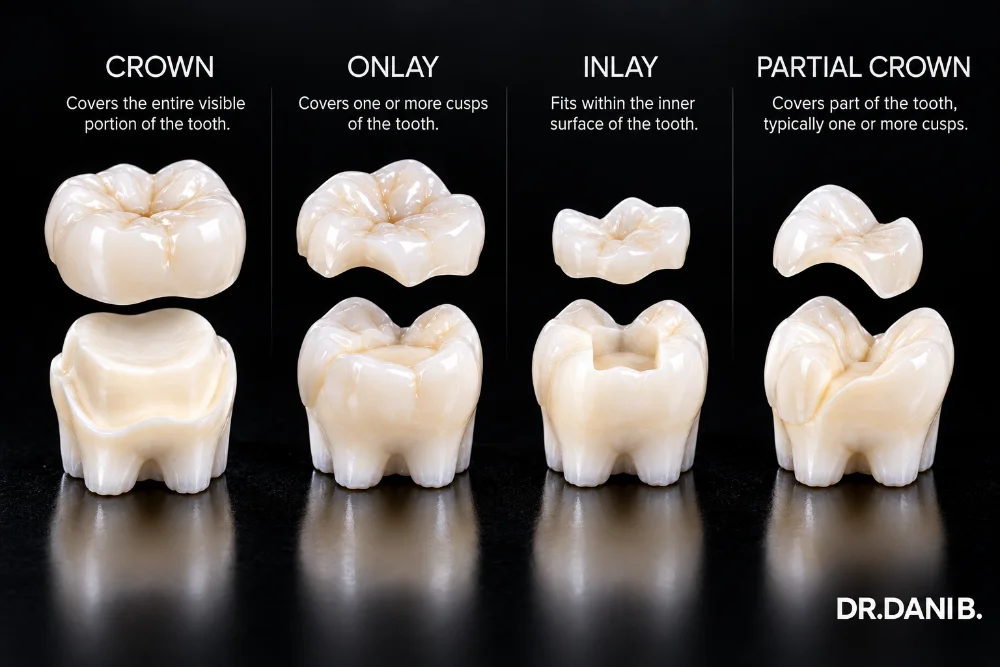
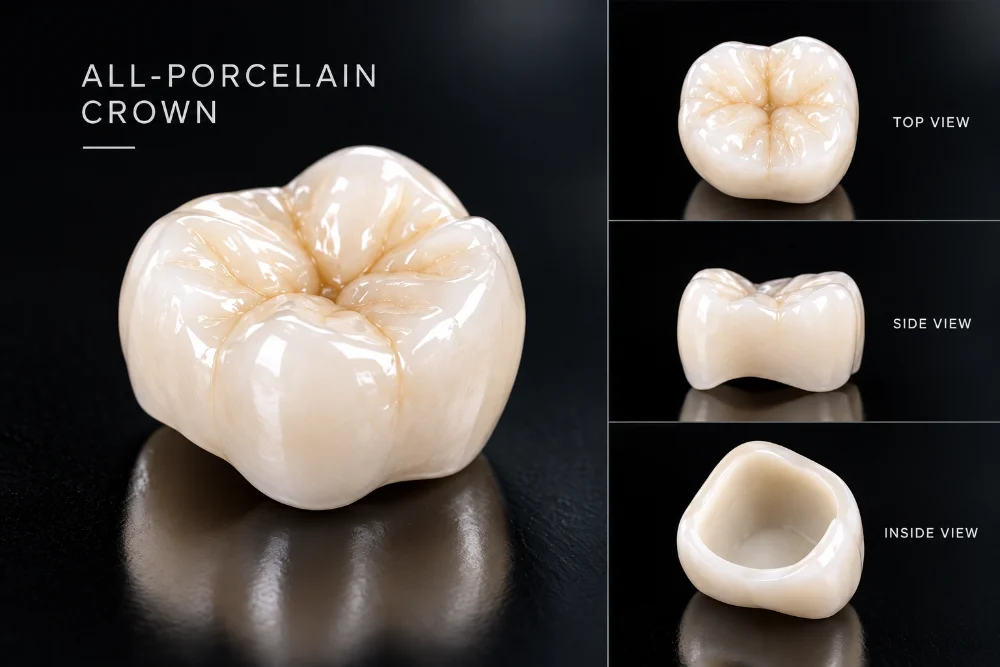
A dental crown is a custom restoration that covers the entire visible portion of a tooth, restoring its size, shape, strength, and appearance. A porcelain or ceramic crown is tooth-colored, which is why it is often chosen when a restoration needs to look natural as well as function well. Teeth are naturally strong, but wear and tear, decay, trauma, and other damage can weaken them over time, and a crown provides 360-degree protection that a filling alone may not.
A crown is not the answer for every damaged tooth. When enough healthy structure remains, a more conservative repair may be the better long-term choice. That is why Dr. Dani B. evaluates each tooth individually before recommending a crown, a bonded restoration, an inlay or onlay, or a veneer.
When Dr. Dani B. May Recommend a Porcelain Crown
A porcelain crown is generally considered when a tooth needs more protection or rebuilding than a filling can provide. The situations below are among the most common reasons a crown enters a treatment plan, though the final decision always depends on an in-person evaluation.
Deep Decay or a Large, Failing Filling
When decay is extensive or an old filling is large enough that the remaining tooth is thin or unsupported, a crown can protect what is left and reduce the risk of further breakage. The clinical judgment is how much sound structure remains and whether a filling would leave the tooth vulnerable.
Severe Wear or Loss of Tooth Height
Significant wear, including wear associated with grinding or clenching, can shorten teeth and compromise their structure. When integrity is affected, a crown can rebuild height, shape, and function, and a nightguard is often discussed to protect the result.
A Tooth Weakened After Root Canal Treatment
A tooth that has undergone root canal treatment may also have lost substantial structure from decay, fracture, previous restorations, or the treatment access itself. Depending on the remaining tooth structure, tooth location, and bite forces, a crown may be recommended to provide full-coverage support and restore function.
A Cracked, Fractured, or Broken Tooth
Cracks, fractures, and other structural damage can weaken a tooth and worsen under normal chewing forces. When enough tooth structure remains to restore the tooth, a full-coverage crown can reinforce the weakened tooth and help distribute chewing forces across the restoration. Whether a crown or a more conservative repair is appropriate depends on the location & extent of the damage and the condition of the remaining tooth.
Selected Cosmetic Concerns Involving a Misshapen or Discolored Tooth
In some cases, a misshapen or deeply discolored tooth is best addressed with full coverage, particularly when the tooth is also structurally compromised. When a tooth is largely intact and the goal is mainly cosmetic, a veneer or bonding may be the more conservative option instead.
A porcelain crown can also form the visible restoration on top of a dental implant used to replace a missing tooth. Implant-supported crowns are planned separately from crowns placed over natural teeth, and the appropriate restoration depends on the implant, surrounding tissues, bite, and overall treatment plan.
When a Conservative Restoration May Be Better Than a Full Crown
Biomimetic dentistry focuses on preserving healthy tooth structure whenever clinically possible. If enough sound structure remains, bonded restorations, inlays, or onlays may provide a more conservative option than full coverage. A full crown becomes more appropriate when the tooth is deeply fractured, heavily restored, severely worn, or otherwise needs circumferential support. The decision is therefore not between a “biomimetic crown” and a regular crown, but between a conservative restoration and full-coverage treatment based on the condition of the tooth.
Who Is a Candidate for a Porcelain Crown?
A porcelain crown may be appropriate when a tooth has lost enough strength or structure that a filling or partial restoration would not provide adequate support. Candidacy depends on the condition of the individual tooth and what is needed to restore it predictably.
You may be a candidate if you have a tooth that is significantly decayed, cracked, worn, broken, or weakened after a root canal, and that needs more than a filling to stay strong and functional. You may be better served by a more conservative option if enough healthy structure remains, or by a veneer if the tooth is largely intact and the concern is primarily cosmetic. The only way to know is a clinical evaluation, and Dr. Dani B. will tell you if a crown is not the right choice for your tooth.
How a Crown Is Planned: Evaluation and Digital Scanning
Once the appropriate type of restoration has been determined, digital planning helps Dr. Dani B. gather the information needed to design the crown around the tooth, bite, and surrounding smile.
The office uses an iTero Intraoral Element Scanner to create 3D digital scans for restorative appliances such as crowns, along with digital X-rays for diagnostic planning. Photographs may also be used when shade, shape, and natural tooth characteristics need to be coordinated with surrounding teeth. Digital information can support communication with the dental laboratory and Dr. Dani’s in-house Master Ceramist. The number and timing of visits depend on the individual crown case and treatment plan.
These reviews reflect individual patient experiences. Treatment needs, comfort, cosmetic results, and long-term outcomes vary by patient.
“The entire staff is friendly, positive and professional. Dr. Dani believes in no pain and will numb you right up! They also have all of the latest technology in dentistry so you know you’re getting the best care. Plus they’ll give you headphones to listen/watch NetFlix on a screen above you while they do the work. It’s the most comfortable I’ve ever been at a dentist office. Thank you for being an amazing team!”
Porcelain Crown Materials and How Dr. Dani B. Chooses
Patients often ask which crown material is best. The honest answer is that the right material depends on the tooth, the bite, how much structure remains, and how the restoration needs to look, and the exact ceramic system is chosen during treatment planning rather than promised in advance.
How Porcelain and Ceramic Crown Materials Are Selected
Porcelain and other tooth-colored ceramics are commonly used when a crown needs to restore function while also blending with surrounding teeth. Different ceramic materials vary in strength, translucency, thickness requirements, and how they respond to bite forces.
Dr. Dani B. selects the material and crown design according to the location of the tooth, the amount of healthy structure that remains, the forces the restoration will need to withstand, and the appearance needed to coordinate with surrounding teeth. The specific ceramic system is therefore selected for the individual case rather than applying one material to every crown.
Why an In-House Master Ceramist Matters for a Natural Look
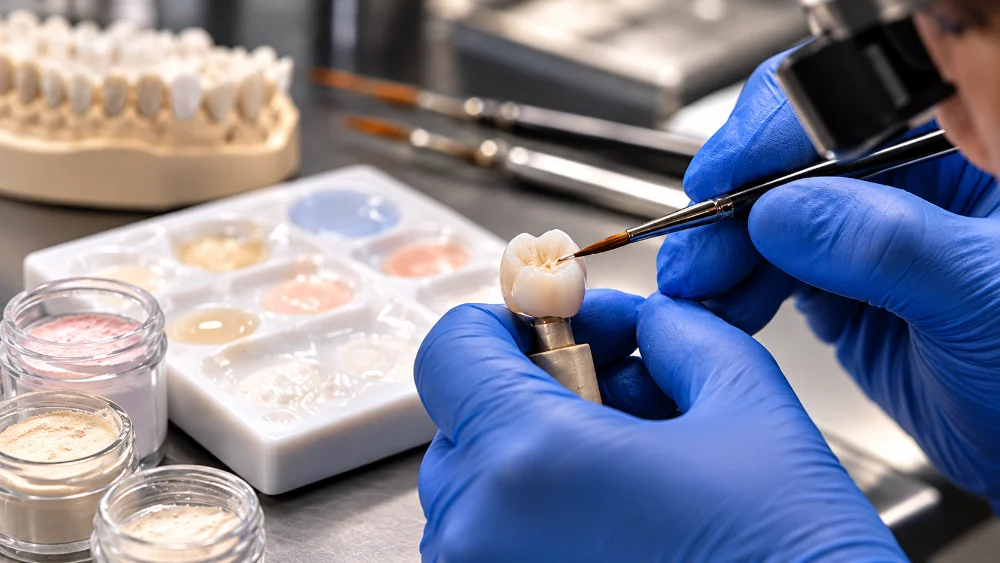
Dr. Dani B. works with an in-house Master Ceramist who customizes porcelain restorations using details such as shade, markings, glaze, & surface characterization to help the crown harmonize with surrounding teeth. Close communication between the dentist and ceramist is particularly relevant for visible teeth, where shape, color, translucency, and symmetry can strongly affect how naturally the restoration integrates with the smile.
When an Old Crown or Dark Gum Line May Need Evaluation & Replacement
Older crowns can develop visible changes at the gum line as restorations age or gum tissue recedes. A dark or gray margin may sometimes be associated with the metal substructure of an older porcelain-fused-to-metal crown, but discoloration around a crown can have different causes and should be evaluated clinically before replacement is recommended.
A crown may need replacement because of wear, chipping or fracture, looseness, recurrent decay, gum recession, compromised margins, or an aesthetic mismatch with surrounding teeth. A crown that breaks or comes off should be evaluated promptly because the underlying tooth may be more sensitive and less protected. When removal is needed, laser-assisted removal may be considered for selected crowns or veneers, but suitability depends on the restoration and clinical situation and cannot be guaranteed for every material.
“Always feel like I am in great hands here. They are friendly, professional, and provide excellent care. Love this team.”
Porcelain Crown vs. Porcelain Veneer: Which Is Right for You?
Crowns and veneers can both change the appearance of a tooth, but they serve different purposes. A porcelain crown covers the visible tooth circumferentially and is generally used when a tooth is structurally compromised and needs full-coverage support. A porcelain veneer is bonded primarily to the front surface and is generally considered when the tooth remains relatively intact, and the concern is primarily cosmetic.
How Dr. Dani B. Decides Between a Crown and a Veneer
The decision depends on how much healthy tooth structure remains, the location and extent of damage, bite forces, enamel, grinding or clenching, and the cosmetic change being planned. A significantly weakened front tooth may need the support of a crown, while a structurally sound tooth may be better suited to a veneer or another conservative option.
For more detail about restoring a damaged front tooth, see our front-tooth porcelain crown resource. For a broader comparison of cosmetic restorations, see our veneers vs. bonding vs. crowns page.
Meet the Dentist Behind Your Crown: Dani Benyaminy, DDS
Crown work at the practice is led by Dr. Dani B., whose training and philosophy shape how each restoration is planned and finished.
Dani Benyaminy, DDS (Founder and Cosmetic Dentist)
Dani Benyaminy, DDS, is a California native who completed his undergraduate education at UCLA and earned his dental education at the NYU College of Dentistry. He is a member of the American Dental Association, American Academy of Cosmetic Dentistry, and California Dental Association. His practice includes cosmetic, restorative, preventive, and general dentistry, with an intentionally conservative and minimalistic treatment philosophy and a facial-aesthetic approach to cosmetic planning. For porcelain crowns, that perspective is applied to both the structural needs of the tooth and how the restoration fits within the patient’s overall smile.
“As someone who struggles with extremely high anxiety involving dental work, Dr. Dani and his team provided by far the best experience I ever had at any office. From the check-in desk to the actual dental work, every member of the team does their best to make sure you know they are looking out for you. They are professional and determined to find a solution that will work for YOU. I am extremely grateful to have found them.”
Understanding the Cost of Porcelain Crowns in Los Angeles
There is no single price for a porcelain crown, because cost depends on the tooth, the complexity of the case, the material and customization involved, and whether related treatment such as a root canal or a nightguard is needed. The most accurate way to understand your investment is a consultation and treatment plan.
The practice treats crown cost as part of a customized plan rather than a fixed number, and Dr. Dani B.’s office can review payment and financing options and coordinate care for local and traveling patients. Because a crown is typically a staged treatment, the plan will also outline the number of visits your specific case is likely to involve.
What to Expect: The Porcelain Crown Process and Recovery
Once a crown has been selected as the appropriate restoration, treatment generally takes place over more than one visit. The exact sequence depends on the tooth and individual treatment plan.
Tooth Preparation and a Temporary Crown
The tooth is prepared under local anesthesia, and impressions or digital scans are taken so the final crown can be made. A temporary crown may be placed to protect the tooth in the meantime. A full-coverage crown does require tooth preparation, so this is not a no-prep procedure, though it is performed with anesthesia for comfort.
Placing the Final Crown
At a later visit, the custom porcelain crown is tried in, adjusted, and bonded or cemented securely. Master Ceramist involvement supports the shade, shape, texture, and natural integration of the finished restoration with your smile.
Recovery and Sensitivity
Some patients notice mild hot or cold sensitivity for a few days after crown treatment. There is no universal recovery timeline, and comfort varies by patient. Follow your individualized aftercare instructions, and contact the office if pain is severe, worsening, or persistent, or if the crown feels high, loose, or damaged.
How Long Do Porcelain Crowns Last?
Porcelain crowns commonly last about 10 to 15 years or longer with appropriate care, although lifespan varies by patient. Oral hygiene, bite forces, grinding or clenching, routine dental care, gum changes, normal wear, chipping or fracture, and the condition of the crown margins can all affect how long a restoration remains serviceable.
Can a Tooth Decay Under a Crown?
The crown material itself does not develop cavities, but the natural tooth beneath the restoration and around the crown margin can still decay. Plaque accumulation, margin changes, gum recession, and other factors can increase risk. New sensitivity, pain with biting, gum inflammation, looseness, or a visible change near the crown margin should be evaluated. Regular examinations, good home care, & dental X-rays when clinically indicated can help monitor the tooth beneath & around the restoration.
Protecting Your Crown Over Time
Brush twice daily, clean carefully around the crown margin, floss regularly, and keep up with professional exams and cleanings. Avoid using your teeth or crowns to bite very hard objects, and if you grind or clench, ask about a custom nightguard to protect your crowns and other restorations.
Porcelain Crown Care for Los Angeles and Beverly Hills Patients
Dr. Dani B.’s office is located at 10700 Santa Monica Blvd., Suite 301, Los Angeles, and welcomes patients from Beverly Hills and surrounding communities. Because porcelain crown treatment may involve more than one stage, visit timing is planned around the individual tooth, restoration, and treatment sequence.
Common Questions About Porcelain Crowns in Los Angeles and Beverly Hills
1. Can a porcelain crown be used on a tooth with a large filling?
Yes, depending on how much healthy tooth structure remains. A large filling can leave the surrounding tooth more vulnerable to fracture, particularly when the remaining walls are thin or already damaged. Dr. Dani B. evaluates the existing filling, remaining tooth structure, bite forces, and any signs of cracking before determining whether a crown or a more conservative restoration is appropriate.
2. When do I need a crown instead of a filling, inlay, or onlay?
It depends on how much healthy tooth structure remains, the size of any fracture or filling, your bite, and how restorable the tooth is. When enough sound structure remains, a more conservative repair such as a bonded restoration, inlay, or onlay may be appropriate. When the tooth needs full-coverage protection, a crown is usually the better choice.
3. Does every tooth need a root canal before getting a porcelain crown?
No. A root canal is not automatically required before a porcelain crown. A crown may be recommended for a cracked, heavily filled, worn, or otherwise weakened tooth even when root canal treatment is not needed. Root canal treatment is considered when the pulp inside the tooth is inflamed or infected. Dr. Dani B. evaluates the tooth, symptoms, X-rays, remaining structure, and previous treatment before determining whether a crown alone or root canal treatment followed by a restoration is appropriate.
4. What is the difference between a porcelain crown and a zirconia or other ceramic crown?
Porcelain, zirconia, and other ceramics differ in translucency, strength, thickness requirements, and how they respond to bite forces. Dr. Dani B.’s current restorative care includes porcelain crowns and metal-free restorations, while the material for an individual crown is selected according to tooth location, remaining structure, bite forces, and aesthetic goals. The specific ceramic system can be discussed during treatment planning.
5. Can I get a porcelain crown if I grind or clench my teeth?
Possibly. Grinding or clenching does not automatically rule out a porcelain crown, but it can affect material selection, crown design, and how much force the restoration will need to withstand. Dr. Dani B. considers your bite, tooth location, remaining tooth structure, and signs of wear when planning the restoration. A custom nightguard may also be discussed when appropriate to help protect the crown and other teeth from excessive forces.
6. How is a porcelain crown matched to the surrounding teeth?
Dr. Dani B. considers the shade, shape, translucency, texture, and proportions of the surrounding teeth when planning a porcelain crown. Digital scans and photographs may be used to support restorative planning, and the practice works with an in-house Master Ceramist who can customize details such as shade, markings, glaze, and surface characterization. The goal is to help the restoration coordinate naturally with the surrounding smile, although the final appearance depends on the individual tooth and treatment plan.
7. Can a cracked tooth be saved with a porcelain crown?
Sometimes. Whether a cracked tooth can be restored depends on the location, depth, and extent of the crack and the condition of the remaining tooth. A crown may reinforce a restorable tooth by providing full-coverage support, but some cracks extend too far for predictable restoration. An examination and appropriate imaging help determine whether the tooth can be treated.
8. Can a porcelain crown fix a tooth that has worn down from grinding?
A crown may be used to rebuild a significantly worn tooth when enough structure has been lost to affect its strength, shape, height, or function. Grinding or clenching also needs to be considered because the same forces that contributed to the wear can affect the new restoration. Depending on the case, a nightguard may be discussed to help protect the crown and other teeth.
9. What happens if my porcelain crown feels too high when I bite?
A new crown can sometimes feel different as you adjust to it, but a bite that consistently feels high or uncomfortable should be evaluated. Your dentist can check how the crown contacts the opposing teeth and determine whether an adjustment is needed. Persistent discomfort when biting should not simply be ignored.
10. Can a porcelain crown be replaced if I do not like how it looks?
A crown can be replaced when there is a clinical or aesthetic reason to do so, but replacement requires removing the existing restoration and reassessing the tooth underneath. If the concern involves color, shape, proportions, or how the crown blends with neighboring teeth, Dr. Dani B. can evaluate the restoration and discuss whether replacement is appropriate.
11. Can receding gums affect the appearance of a porcelain crown?
Yes. Gum recession can expose part of the tooth or crown margin that was previously covered by gum tissue, which may change how the restoration looks. A visible dark or discolored area near the gumline can have several causes, however, so the crown and surrounding tissues should be examined before assuming the restoration needs replacement.
12. What should I do if my porcelain crown comes off?
Keep the crown if you can retrieve it and contact your dentist for an evaluation. Avoid trying to permanently reattach it yourself because the underlying tooth and the crown need to be examined first. Whether the existing crown can be recemented or a new restoration is needed depends on the condition of the crown, the tooth underneath, and the reason it came loose.
13. Where can I get porcelain crowns in Los Angeles near Beverly Hills?
Dr. Dani B. provides porcelain crown care at 10700 Santa Monica Blvd., Suite 301, Los Angeles, CA 90025, and welcomes patients from Beverly Hills. Call (310) 910-9950 to request an evaluation.
14.What should Beverly Hills patients expect when planning a crown visit to the Los Angeles office?
Porcelain crown treatment may involve more than one stage, so the team will explain the expected visit sequence during your consultation. Travel time varies by starting point and traffic, and appointments are planned around the needs of the tooth and restoration.
15.Can out-of-town or busy Los Angeles patients coordinate crown treatment with Dr. Dani B.?
Yes. The practice welcomes traveling patients and busy local patients, and will discuss visit sequencing during your consultation. Because a crown is staged, the team plans the timing with you rather than promising compressed or same-day treatment.
Related Crown Guides and Trusted Dental Resources
For additional information about porcelain crowns, conservative restorative care, related cosmetic options, and long-term maintenance, see these resources from Dr. Dani B. Cosmetic Dentistry and independent dental organizations.
From Dr. Dani B. Cosmetic Dentistry
Restore and Protect a Damaged Tooth With a Porcelain Crown in Los Angeles
If you are concerned about a cracked, worn, heavily restored, or discolored tooth, Dr. Dani B. can review the tooth, bite, and restorative goals and explain whether a porcelain crown or a more conservative option may be appropriate.
Request a Porcelain Crown Evaluation in Los Angeles
Dr. Dani B. 10700 Santa Monica Blvd, Suite 301, Los Angeles, CA 90025
Hours:
- Monday: 8:00 AM to 5:00 PM
- Tuesday: 8:00 AM to 5:00 PM
- Wednesday: 8:00 AM to 5:00 PM
- Thursday: 9:30 AM to 4:00 PM
- Friday: 8:00 AM to 3:00 PM
- Saturday and Sunday: By appointment only.