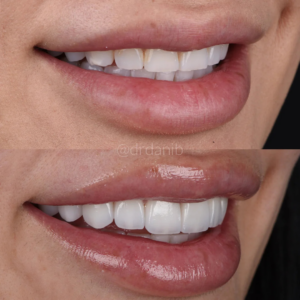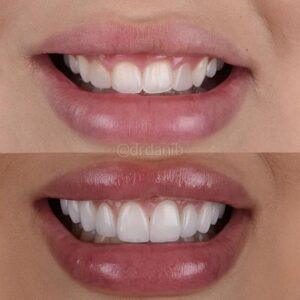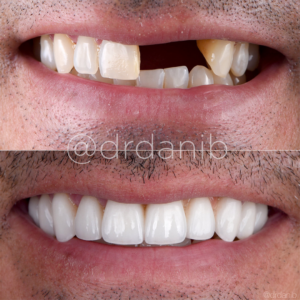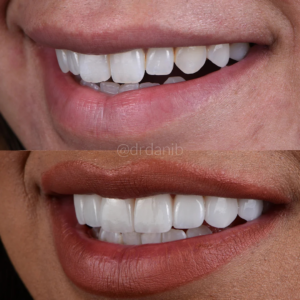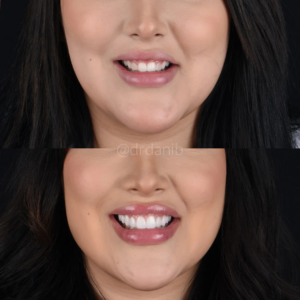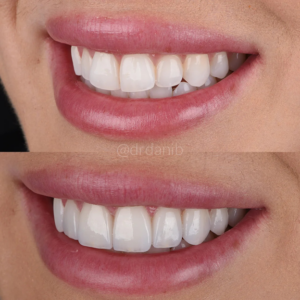

When considering a transformation of your appearance, the mouth often serves as the focal point. In cosmetic dentistry, porcelain veneers represent the industry benchmark for both restorative and aesthetic excellence. This process involves restoring youthful tooth proportions and capturing the specific light-reflective qualities found in natural enamel.
A common hesitation some patients have is the fear of artificial aesthetics. Many have seen examples of teeth veneers that appear opaque, monochromatic, or excessively bulky, often referred to as a “chiclet” look. These results happen when the material lacks the depth and character of biological structures. True smile rejuvenation avoids these pitfalls by focusing on how light interacts with the tooth surface. By prioritizing high-quality materials and artistic application, patients can achieve a look that feels authentic to their facial structure while correcting years of wear, staining, or misalignment.
Dr. Dani B. is a cosmetic veneers specialist in Los Angeles who focuses on creating custom smiles that look natural and fit each person’s face. He is known for being very careful with his work and prefers a conservative approach that keeps as much of your original tooth as possible. By focusing on the shape and look of real teeth, he helps his patients get a new smile that doesn’t look like “work” was done.
The Material Science: Porcelain vs. Composite
Understanding why porcelain veneers are the gold standard starts with the science of the materials used. In modern practices, two primary substances are used for veneers: ceramic (porcelain) and composite resin. While composite resin can be applied in a single visit, it is a porous plastic-based material. By contrast, porcelain veneers are crafted from feldspathic porcelain or lithium disilicate. These glass-ceramic materials are fired at high temperatures to create a dense, glass-like structure that is incredibly strong.
When comparing porcelain veneers vs composite veneers, the differences in longevity and durability are key. A composite restoration typically lasts up to seven years before it begins to dull, stain, or chip. High-quality porcelain, however, frequently lasts 10 to 20 years with proper care. Porcelain is also far more resistant to the daily forces of chewing and biting. Because it is chemically inert and highly polished, it can maintain its structural integrity and luster for 10 years or longer. At the same time, the composite tends to wear down and lose its shape. This durability makes porcelain the preferred choice for those seeking a lasting investment in their appearance.
Also Read: How Many Dental Veneers in Los Angeles Do I Actually Need for a Natural Smile?
The Optical Properties of Natural Teeth
To understand what makes porcelain veneers look natural, it helps to look at how real teeth interact with light. Natural enamel is not a flat shade of white. It has a translucent, layered structure that allows light to pass through the surface before reflecting off the underlying dentin. That interaction creates depth, dimension, and subtle color variation that gives teeth a lifelike appearance.
This is where high-quality porcelain veneers stand apart. Rather than sitting on the surface as a uniform layer, they are designed to mimic this same light behavior. Lower-quality or mass-produced veneers often appear opaque or overly bright because they reflect light only at the surface. The result can look artificial or “flat,” especially under natural lighting.
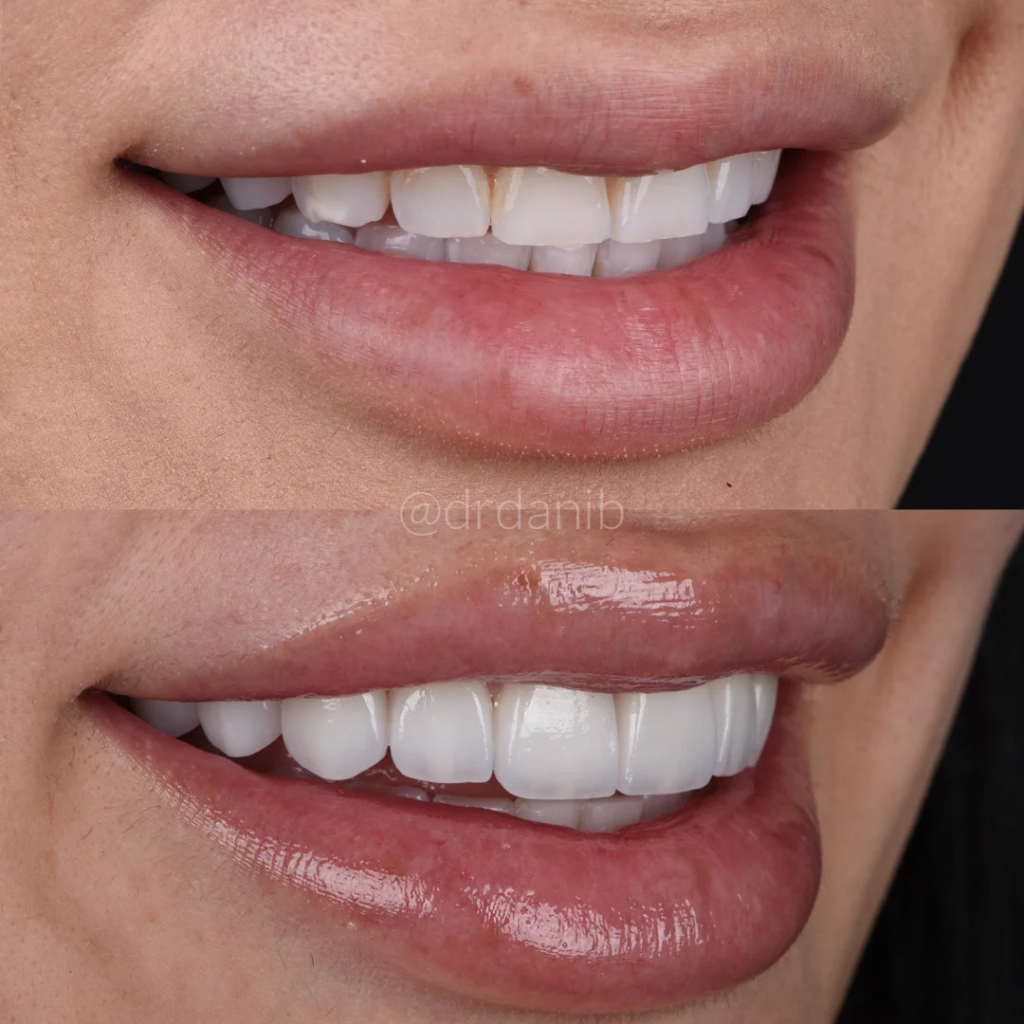
In contrast, premium porcelain veneers are hand-layered by skilled ceramists. Each layer is built to control how light is absorbed, diffused, and reflected within the restoration. This becomes especially noticeable along the incisal edges, the biting edges of the teeth. In natural teeth, these areas are slightly more translucent and may even show subtle blue-gray tones depending on the lighting. Reproducing that effect requires precision and an understanding of both material science and dental anatomy.
When done correctly, the veneer doesn’t stand out. It blends. By matching the optical properties of adjacent teeth, including translucency, brightness, and internal reflection, the restoration integrates seamlessly into the smile. The result is not a “perfect” tooth, but one that looks real in every lighting condition and from every angle.
Surface Texture and Micro-Morphology
The secret to smile rejuvenation often lies in what you cannot see at a distance. If you look closely at a natural tooth, the surface is never perfectly smooth. It contains subtle lobes, vertical grooves, and microscopic ridges known as perikymata. These tiny surface irregularities play a massive role in how light scatters across the smile. Without this texture, a veneer looks like a piece of polished bathroom tile, unnaturally shiny and reflective.
Hand-finished natural-looking veneers include these micro-morphological details. By adding subtle texture to the ceramic, the ceramist breaks up light reflections, softening the tooth’s appearance. This custom characterization also involves adjusting the shape to match a patient’s age and facial symmetry. A younger smile may have more pronounced textures and rounded edges, while a more mature smile might feature softer contours. This level of detail ensures the porcelain looks like a part of the person, rather than an addition to them.
Also Read: Do Veneers Require Shaving Your Teeth? Understanding the Process Clearly
The Clinical Process in Los Angeles
Achieving the smile makeover with porcelain veneers in Los Angeles requires a combination of technology and artistry. The process begins with a careful design phase in which the proportions of the new teeth are planned relative to the lips and the facial midline. Modern techniques allow for a minimally invasive approach, meaning only a tiny fraction of enamel is adjusted to make room for the thin ceramic shells.
Digital Smile Design (DSD) technology is often utilized to provide a preview of the final result. This allows the patient to see their smile makeover before the porcelain is even fabricated. The relationship between the veneer specialist and the master ceramist is the most important factor here.
In a city with high aesthetic standards, the collaboration between the clinical chair and the dental laboratory must be seamless. This partnership ensures that the final porcelain veneers for smile rejuvenation are not just functional, but also can complement the individual’s personality.
Functional and Biological Benefits
Beyond their visual appeal, porcelain dental veneers offer significant biological advantages. One of the standout benefits of porcelain veneers for natural smile preservation is stain resistance. Because glazed porcelain is non-porous, it does not absorb pigments from coffee, tea, or red wine the way natural enamel or composite resin does. This means your smile remains bright for years without the need for frequent bleaching.
Furthermore, porcelain is highly biocompatible. The smooth finish of the ceramic is gentle on the gingival (gum) tissue, promoting a healthy response and reducing the risk of inflammation often seen with rougher materials. Functionally, dental veneers can also provide structural support. They can reinforce teeth that have thin enamel or minor cracks, acting as a protective shield. In some cases, they serve as a form of instant orthodontics, correcting minor alignment issues or closing gaps without the need for years of braces, provided the underlying bite is stable.
Also Read: Smile with Confidence: How to Care for Your Veneers
Conclusion
Investing in your smile is a decision that impacts your confidence and your daily interactions. While porcelain veneers require a higher initial investment than other methods, their aesthetic and functional superiority provides much better long-term value. By focusing on the three pillars of light, translucency, and texture, it is possible to achieve a transformation that looks entirely natural and lasts for decades.
A successful smile makeover should never look like a procedure was done; it should simply look like your best possible smile. If you are ready to explore how these advanced materials can refresh your appearance, the next step is to schedule a professional evaluation to determine whether you are a candidate for this treatment with Dr. Dani B.