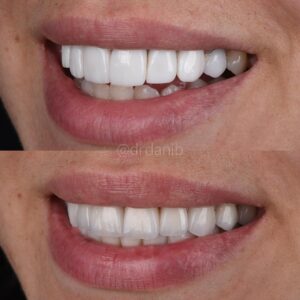
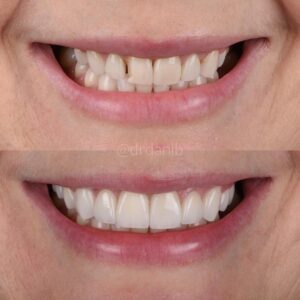
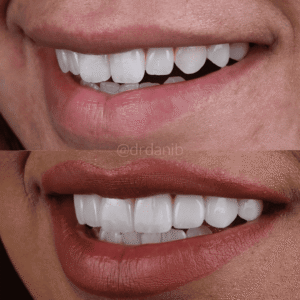
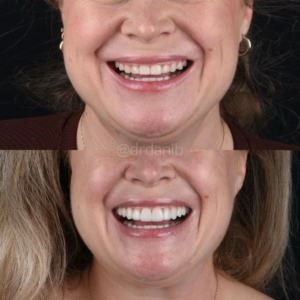
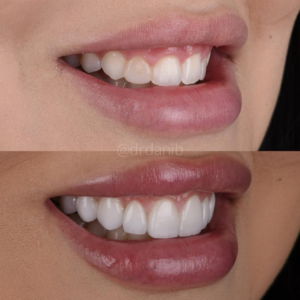
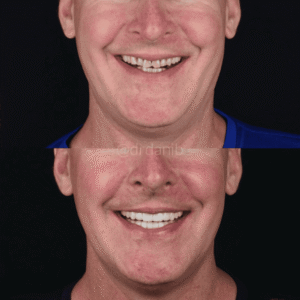
Dental veneers can transform the appearance of a smile, but they aren’t always the best place to start. If your teeth have untreated decay, your gums are inflamed, or your bite is putting excessive pressure on certain teeth, addressing those concerns first may lead to a healthier, more predictable cosmetic result. In other cases, a simpler treatment such as bonding, whitening, or orthodontics may accomplish what you’re looking for without the same level of tooth preparation.
It’s easy to focus on the finished smile when considering veneers. What matters just as much, however, is the condition of the teeth underneath and how well the restorations will function over time. A beautiful result should complement your oral health, not come at its expense.
At Dr. Dani B., we take the time to understand what you want to change about your smile before recommending treatment. Whether you’re concerned about discoloration, uneven teeth, small gaps, or worn edges, our goal is to identify an approach that addresses those concerns while preserving healthy tooth structure whenever possible.
When Dental Veneers May Not Be the Right First Step
Porcelain veneers are thin, custom-made restorations bonded to the front surfaces of teeth. They can improve tooth color, shape, proportions, and certain cosmetic irregularities, but they aren’t designed to treat every dental problem.
Before considering veneers, it’s important to understand whether an underlying condition could affect their longevity or make another treatment more appropriate.
Untreated Cavities or Gum Disease
Healthy teeth and gums provide the foundation for cosmetic dentistry. If a tooth has untreated decay, placing a veneer over it does not resolve the underlying problem. Likewise, active gum disease can affect the tissues surrounding the teeth and may interfere with the appearance and stability of cosmetic restorations.
Inflamed gums can also change as they respond to treatment. If veneers are placed before gum health is stabilized, changes in the gumline may affect how the restorations look.
For these reasons, we evaluate the condition of your teeth and gums before moving forward with cosmetic treatment. Addressing decay or periodontal concerns first can help establish healthier conditions for the final restoration.
Severely Worn, Cracked, or Weakened Teeth
Veneers primarily cover the visible front surfaces of teeth. They can improve minor chips, worn edges, and cosmetic imperfections, but they may not provide enough coverage or structural support for a tooth with extensive damage.
For example, a tooth with a large existing filling or significant fracture may require a crown or another restorative approach. The decision depends on how much healthy tooth structure remains and whether the restoration can withstand normal biting forces.
It’s also important to understand why the damage occurred. If your teeth are wearing down because of grinding, acid erosion, or bite problems, those factors need attention before choosing a cosmetic solution.
Teeth Grinding or Bite Problems
Clenching and grinding, also known as bruxism, can place substantial stress on natural teeth and dental restorations. Veneers may chip, fracture, or debond when exposed to excessive forces.
This doesn’t automatically mean that patients who grind their teeth cannot receive veneers. The severity of the grinding, the condition of the teeth, and the way the upper and lower teeth meet all influence treatment planning.
In some cases, addressing bite concerns or recommending a protective nightguard may be part of the plan. More significant alignment problems may call for orthodontic treatment before cosmetic restorations are considered.
When a More Conservative Treatment May Be Better Than Veneers
Not every cosmetic concern requires porcelain restorations. Sometimes, the change you’re hoping to achieve can be accomplished with less alteration to your natural teeth.
The best starting point depends on what’s bothering you about your smile and whether the issue involves color, shape, spacing, alignment, or structural damage.
Dental Bonding for Small Chips, Gaps, and Uneven Edges
If you have a small chip, a minor gap, or one tooth that looks slightly shorter than the others, dental bonding may be worth considering before veneers.
Bonding uses tooth-colored composite resin to reshape or repair selected areas of a tooth. In many cases, it requires little or no removal of healthy enamel, making it a conservative option for localized cosmetic changes.
However, bonding has limitations. Composite resin can stain, wear, or chip over time and may require periodic maintenance or replacement. It also may not be the most predictable choice when several teeth need extensive changes in shape or color.
Porcelain veneers can offer greater control over certain cosmetic changes, particularly when multiple front teeth are involved. The choice comes down to the extent of the improvement needed, the condition of the teeth, and the long-term maintenance you’re comfortable with.
Professional Teeth Whitening for Discoloration
If you’re happy with the shape and alignment of your teeth but want a brighter smile, whitening may be a more appropriate first step.
Professional teeth whitening can improve many types of staining without permanently changing tooth shape or requiring enamel preparation for veneers. It’s particularly relevant when discoloration is the main concern rather than a combination of cosmetic issues.
Whitening does have limitations. Certain internal stains may respond less predictably, and existing crowns, fillings, and veneers do not whiten like natural teeth.
We also consider whether whitening should happen before other cosmetic work. When bonding or porcelain restorations are planned, establishing the desired natural tooth shade first can help with color matching.
Orthodontic Treatment for Crooked or Crowded Teeth
Veneers can sometimes create the appearance of straighter teeth by changing their visible contours. However, they do not physically correct tooth position or underlying bite problems.
If teeth are significantly crowded, rotated, or misaligned, orthodontic treatment may offer a more appropriate solution. Moving the teeth into better alignment can address the underlying concern while reducing the need to reshape otherwise healthy tooth structure.
For patients who also want changes in tooth color or shape, orthodontic treatment may be followed by whitening, bonding, or veneers when appropriate.
The important distinction is whether the goal is to improve the appearance of tooth position or correct the position itself.
When Dental Crowns May Be More Appropriate Than Veneers
Veneers and crowns serve different purposes, even though both can improve the appearance of a tooth.
A veneer typically covers the front surface of a tooth, while a crown covers a greater portion of the visible tooth structure. Crowns may be recommended when a tooth has extensive damage, a large existing restoration, or structural weakness that requires more coverage.
For example, a front tooth with a minor cosmetic chip may be suitable for bonding or a veneer. A tooth with a substantial fracture or significant loss of healthy structure may need a different approach to restore its strength and function.
Crowns generally require more tooth preparation than veneers, so they shouldn’t be selected solely because they provide greater coverage. The amount of remaining tooth structure, bite forces, and long-term restorative needs should guide the decision.
At Dr. Dani B., we consider how much healthy tooth structure can be preserved while still providing a restoration suited to the tooth’s condition.
Also Read: When Are Veneers Better Than Orthodontics
Why Healthy Teeth and Gums Matter Before a Smile Makeover
Cosmetic dentistry works best when the underlying oral health has been properly evaluated.
A smile makeover may involve more than one treatment, but the sequence matters. Addressing active dental problems before elective cosmetic procedures can reduce the risk of complications and help create a more stable foundation for the final result.
Treating Dental Problems Before Cosmetic Work
If an examination reveals cavities, gum inflammation, or other dental concerns, treatment may need to begin there.
For instance, gum disease can cause inflammation and changes in the position of the gumline. Treating it before veneers allows the tissues to stabilize and gives the dentist a more reliable basis for planning the shape and margins of restorations.
Similarly, tooth wear caused by grinding or erosion requires more than simply covering the affected surfaces. Understanding the cause helps determine whether veneers are suitable and what additional measures may be necessary.
Preserving Healthy Tooth Structure
One of the most important considerations in cosmetic dentistry is how much natural tooth structure a treatment requires.
Traditional porcelain veneers often involve removing a thin layer of enamel to create room for the restoration. Although preparation varies by case and some minimal-preparation techniques are possible, enamel removal is irreversible.
That makes it important to consider alternatives when a smaller cosmetic change could achieve a satisfactory result.
Bonding, whitening, and orthodontics may preserve more natural tooth structure in appropriate cases. However, the least invasive treatment isn’t always the best option if it cannot adequately address the underlying problem or provide a predictable result.
How to Know Whether Veneers Are Right for Your Smile
The decision to get veneers should begin with what you want to change, not with the assumption that veneers are the only way to achieve it.
Two patients may have similar cosmetic concerns but require entirely different treatment plans.
For example, one patient may want to close a small gap between otherwise healthy front teeth. Another may have spacing combined with significant bite problems. Although both are concerned about gaps, bonding or veneers might be suitable for one, while orthodontic treatment could be a better starting point for the other.
The same applies to discoloration. Surface staining may respond well to whitening, while certain persistent discolorations or structural imperfections may require a restorative approach.
What We Evaluate During a Cosmetic Dental Consultation
At Dr. Dani B., a cosmetic consultation begins with an assessment of your oral health and the changes you’d like to make.
We consider the condition of your teeth and gums, existing restorations, remaining tooth structure, bite function, and aesthetic goals. Dental X-rays, photographs, or digital records may also be used when appropriate to support diagnosis and treatment planning.
Just as importantly, we discuss what each treatment involves. That includes whether enamel preparation is necessary, how the result may look, what maintenance to expect, and whether another approach could accomplish your goals with less intervention.
Questions Worth Asking Before Choosing Veneers
Before committing to porcelain veneers, it’s worth understanding why they are being recommended over other options.
Ask whether bonding or whitening could address your concerns, whether orthodontic treatment would be beneficial, and how much natural enamel may need to be removed.
It’s also important to discuss the expected lifespan of the restorations, possible complications, and future maintenance. Veneers are durable restorations, but they can chip, loosen, or require replacement over time.
A well-planned cosmetic treatment should make sense not only for the smile you want today but also for the health and function of your teeth in the years ahead.
What Happens if You Need More Than One Dental Treatment?
Some patients are good candidates for veneers but aren’t ready for them immediately.
If several concerns need attention, a staged treatment plan may be more appropriate than completing everything at once.
For example, a patient with gum inflammation, crowding, and discoloration may first need periodontal care. Orthodontic treatment could follow if tooth movement would improve alignment and reduce the amount of restorative preparation required. Whitening or cosmetic restorations may then be considered after the earlier stages are complete.
Not every smile makeover requires this level of planning. However, when multiple dental concerns overlap, the order of treatment can affect both the cosmetic outcome and long-term oral health.
The goal is to address each issue in a way that supports the next step rather than treating every concern independently.
Also Read: Do Veneers Require Shaving Your Teeth? Understanding the Process Clearly
Frequently Asked Questions About Dental Veneers in Los Angeles
When Are Dental Veneers Not the Best First Step?
Veneers may not be the best starting point when a patient has untreated cavities, active gum disease, significant tooth damage, or bite problems that need attention. They may also be unnecessary when a more conservative treatment, such as bonding or whitening, can achieve the desired improvement.
Can Veneers Fix Crooked Teeth Without Braces?
Veneers can sometimes make mildly uneven teeth appear straighter by changing their visible shape. However, they do not correct tooth position or underlying bite problems. When crowding, rotation, or misalignment is significant, orthodontic treatment may be a more appropriate starting point.
Is Dental Bonding Better Than Veneers for Small Chips?
Dental bonding is often worth considering for small chips, minor gaps, or localized shape changes because it may require little or no enamel removal. Veneers may be more suitable for broader cosmetic changes involving several teeth. The decision depends on the extent of damage, desired appearance, and maintenance requirements.
Should I Whiten My Teeth Before Getting Veneers?
Whitening may be recommended before veneers when the surrounding natural teeth also need to be brightened. Because porcelain veneers do not respond to whitening treatments, establishing the desired tooth shade beforehand can help with color matching. The appropriate sequence depends on the overall cosmetic treatment plan.
Can I Get Veneers if I Grind My Teeth?
Teeth grinding does not automatically rule out veneers, but excessive clenching or grinding can increase the risk of damage to restorations. Bite forces, tooth condition, and the severity of bruxism should be evaluated before treatment. A protective nightguard or another treatment approach may be recommended.
Are Dental Crowns Better Than Veneers for Damaged Teeth?
Crowns may be more appropriate when a tooth has extensive structural damage or needs greater coverage than a veneer can provide. However, crowns typically require more tooth preparation. The best restoration depends on the amount of healthy tooth structure remaining and the tooth’s functional needs.
Do Veneers Permanently Damage Your Natural Teeth?
Veneer treatment often requires removing some enamel, which is an irreversible change. Properly planned and maintained veneers do not inherently damage teeth, but preparation, bonding, and long-term maintenance carry considerations and potential risks. Patients should understand these factors before deciding on treatment.
How Do I Know if I Need Veneers or Another Cosmetic Dental Treatment?
The best treatment depends on whether your primary concern is discoloration, tooth shape, spacing, alignment, or structural damage. A dental examination helps determine whether veneers are appropriate or whether bonding, whitening, orthodontics, or another restorative treatment would better address your needs.
Explore Your Cosmetic Dentistry Options at Dr. Dani B. in Los Angeles
A more attractive smile doesn’t always begin with veneers. Sometimes, the right first step is treating an underlying dental problem, improving alignment, or choosing a conservative cosmetic treatment that preserves more of your natural teeth.
At Dr. Dani B., we focus on understanding your goals and recommending treatment that supports both your smile and long-term oral health. Whether veneers are the right choice or another approach makes more sense, our goal is to help you make an informed decision with confidence.
Schedule a consultation with Dr. Dani B. to explore your cosmetic dentistry options in Los Angeles.