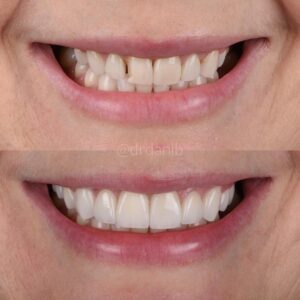
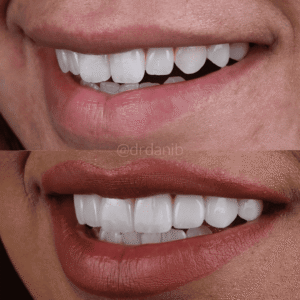
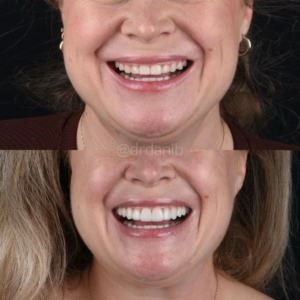
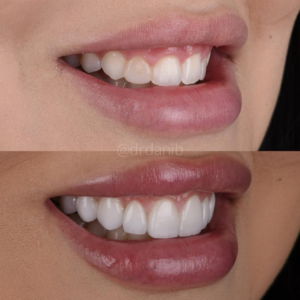
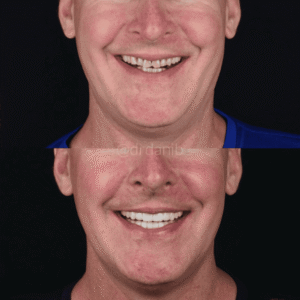
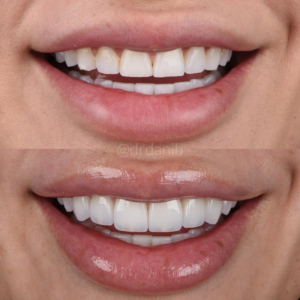
You can have porcelain veneers in a beautiful shade of white and still feel that something about your smile looks off. Maybe your front teeth appear too long, the edges look unusually straight, or every tooth seems to have exactly the same shape. These details can make veneers noticeable for reasons you didn’t intend.
Often, the difference comes down to how the edges of the teeth were designed.
At Dr. Dani B. in Los Angeles, we believe a beautiful smile should look natural when you’re laughing, speaking, and going about your day, not just when you’re posing for a photograph. That’s why the shape, length, and position of your veneers deserve as much attention as their color.
Why the Edges of Your Veneers Matter More Than You Might Think
The biting edges of your front teeth are called incisal edges. They’re a small part of your smile, but they have a considerable influence on how your teeth look together.
Look closely at a natural smile. The two upper front teeth are usually more prominent than the teeth beside them. The lateral incisors often have slightly different contours, while the canines create another transition in shape. These variations give the smile character.
When veneers are designed with identical lengths and overly uniform edges, that character can disappear. The teeth may look like a single straight row rather than individual teeth.
We pay attention to these differences because a natural-looking smile isn’t necessarily perfectly symmetrical. It’s one where the teeth complement each other and suit the person wearing them.
Rounded, Square, or Somewhere in Between?
Some patients prefer softer, more rounded tooth edges. Others like a slightly more defined appearance. Neither is automatically better.
The right shape depends on your existing teeth, facial features, and the appearance you’re hoping to achieve.
A sharply squared edge may look attractive on one smile but too prominent on another. Rounded contours can create a softer appearance, although excessive rounding may make teeth look shorter or less defined.
During veneer planning, we discuss these preferences while considering what will work with your natural anatomy. The goal isn’t to reproduce a fashionable smile design. It’s to find proportions that look right on you.
How Veneer Length Changes the Appearance of Your Smile
Tooth length is one of the first things patients notice when evaluating a smile makeover.
If your front teeth are worn or chipped, carefully planned veneers may restore some of the length you’ve lost. For someone whose teeth appear short, even a subtle change can make the smile look more balanced.
But longer isn’t always better.
Veneers that extend too far may look disproportionate, interfere with the bite, or become more noticeable when you speak. Teeth that are too short, on the other hand, may not create the improvement you were hoping for.
We consider how much of your upper teeth show when you smile, how the edges relate to your lower lip, and how your teeth come together when you bite.
These relationships are more useful than following a single ideal measurement. A length that looks natural for one patient may be entirely wrong for another.
Why Perfectly Identical Veneers Can Look Artificial
One of the common misconceptions about cosmetic dentistry is that a beautiful smile requires every tooth to match perfectly.
Natural teeth don’t work that way.
Your central incisors, lateral incisors, and canines have different shapes and roles. Their edges may vary slightly in height, curvature, and how they meet neighboring teeth.
When those differences are erased, veneers can take on a flat or manufactured appearance, particularly if the restorations are also very opaque or uniformly bright.
That doesn’t mean symmetry is unimportant. We still want the smile to look balanced. But balance doesn’t require every edge to follow the same line.
Small variations can make the finished result feel more like your own teeth, only with the changes you wanted.
Designing Veneers Around Your Existing Teeth
Before deciding how veneers should look, we need to understand what’s happening with your natural teeth.
Someone with worn front teeth may need a different approach from someone whose main concern is uneven tooth shape. A chipped edge, an old restoration, or mild misalignment can also affect the treatment plan.
We evaluate your enamel, gum health, tooth position, and bite. If grinding or clenching has contributed to worn edges, that deserves attention before we decide how much length to restore.
Photographs, impressions, digital scans, or diagnostic models may be used during veneer planning, depending on the case. These tools help us study proportions and discuss the changes you’re considering.
Your preferences matter throughout the process. Some patients want a noticeable cosmetic improvement. Others prefer subtle adjustments that preserve most of their existing smile.
Neither approach should come at the expense of healthy tooth structure or comfortable function.
Can You Preview the Shape of Your Veneers?
In some cases, diagnostic wax-ups or temporary mock-ups can help patients visualize proposed changes before their final restorations are made.
A preview may be especially helpful when you’re considering longer front teeth or a different edge shape. Something that looks appealing in a photograph can feel different when you see it in your own smile.
These planning methods aren’t appropriate or necessary for every case, and a preview isn’t a guarantee of the exact final result. Still, discussing tooth length and contours before treatment gives you a better opportunity to communicate what you like and what you don’t.
Also Read: When Are Veneers Better Than Orthodontics
Beautiful Veneers Still Need to Work With Your Bite
It’s possible for a veneer to look attractive but create problems when the teeth come together.
Your front teeth contact and guide one another during certain jaw movements. If a veneer is too long or its edge is positioned incorrectly, it may experience excessive pressure from the opposing teeth.
Over time, unfavorable forces can contribute to chipping, fracture, loosening, or discomfort.
This is particularly important for patients who grind or clench their teeth. If you have a history of worn enamel, chipped restorations, or jaw tension, we’ll consider how those habits may affect your veneers.
Depending on your examination, additional treatment or a protective night guard may be recommended.
We don’t want your veneers to look beautiful only when your mouth is open. They need to function comfortably when you bite, chew, and speak.
The Difference Between Veneer Edges and Margins
Although the terms sound similar, veneer edges and margins refer to different parts of the restoration.
The incisal edge is the visible biting edge of the tooth. Its shape and length affect the appearance of your smile and how the tooth functions.
The veneer margin is where the porcelain meets your natural tooth.
A well-fitting margin should create a smooth transition that allows you to clean the area effectively. If a restoration is excessively bulky or has an irregular margin, plaque may collect more easily, potentially contributing to gum irritation.
This is one reason veneer design involves more than choosing a pleasing shape. We also consider how the porcelain fits against the tooth and surrounding gum tissue.
Why Veneer Thickness Matters
Veneers that are too bulky can make the teeth appear heavy or protrusive, even when their color and edge shape are attractive.
The amount of porcelain needed depends on the tooth’s position, existing color, desired changes, and selected material.
Some cases allow conservative preparation, while others require more adjustment to achieve the intended result. Porcelain veneers are not automatically a no-preparation treatment.
Our approach is to preserve healthy tooth structure whenever clinically appropriate while allowing enough room for restorations that look natural and function properly.
How Long Will Well-Designed Porcelain Veneers Last?
Porcelain veneers are durable restorations, but they aren’t permanent or maintenance-free.
Their longevity depends on several factors, including the quality of the restoration, available enamel for bonding, bite forces, oral hygiene, and daily habits.
Even carefully designed veneers can chip, loosen, or eventually require replacement. Biting hard objects, grinding your teeth, and neglecting oral hygiene can increase the likelihood of problems.
Caring for veneers is much like caring for natural teeth. Brush with fluoride toothpaste, clean between your teeth daily, and keep up with routine dental examinations.
If you notice a change in how your teeth meet, new sensitivity, or a rough or damaged edge, have it evaluated rather than waiting for the problem to worsen.
What to Ask Before Getting Porcelain Veneers in Los Angeles
A veneer consultation should involve more than looking at shade samples and choosing how white you want your teeth.
Ask how the proposed tooth length will affect your bite. Find out whether your existing enamel and gum health make you a suitable candidate, and discuss how much natural tooth structure may need to be removed.
It’s also worth asking about alternatives. If your concern involves only a small chip or an uneven edge, dental bonding may sometimes be a more conservative option. Orthodontic treatment or whitening may be appropriate for other concerns.
We want patients to understand these distinctions before choosing veneers. The right treatment depends on what needs to change, not simply which cosmetic procedure is most popular.
Also Read: How Many Dental Veneers in Los Angeles Do I Actually Need for a Natural Smile?
Frequently Asked Questions About Porcelain Veneer Edge Design
Why Is Precise Edge Design Important for Porcelain Veneers?
The edges determine much of the visible shape and length of your front teeth. Their design also affects how veneers interact with opposing teeth. Appropriate contours help create a natural appearance while supporting comfortable bite function.
Can Porcelain Veneers Look Too Long or Too Square?
Yes. Veneers that are disproportionately long, overly square, or identical in shape may look artificial. The most suitable design depends on your natural tooth proportions, facial features, and bite.
What Makes Porcelain Veneers Look Natural?
Natural-looking veneers involve more than choosing the right shade. Tooth length, edge shape, translucency, surface texture, and the relationship between neighboring teeth all contribute to the appearance. Small differences between individual teeth can help avoid an overly uniform result.
Can Poorly Designed Veneers Cause Bite Problems?
They can. If the edges create excessive contact with opposing teeth, the restorations may be exposed to unfavorable forces that contribute to discomfort, chipping, or fracture. Bite assessment is an important part of treatment planning.
Will My Natural Teeth Need to Be Shaved for Veneers?
Some enamel preparation may be necessary, depending on your existing tooth position, desired changes, and veneer material. Minimal-preparation approaches are possible in selected cases, but not every patient is a candidate. The goal is to preserve healthy tooth structure whenever appropriate.
How Long Does It Take to Get Porcelain Veneers?
The timeline depends on the number of teeth being treated, the preparation required, and laboratory fabrication. Some patients also need preliminary dental treatment before veneers can be placed. We can discuss the anticipated schedule after evaluating your smile.
How Do I Choose a Cosmetic Dentist for Natural-Looking Veneers in Los Angeles?
Look for a dentist who evaluates your bite and oral health, discusses tooth proportions, explains preparation requirements, and listens to your aesthetic preferences. Ask to review relevant examples of previous work and learn how your proposed veneer design will be planned.
Porcelain Veneers Should Look Like They Belong in Your Smile
The best veneer design isn’t necessarily the whitest, straightest, or most symmetrical. It’s one that suits your features, respects your natural tooth anatomy, and feels comfortable in everyday life.
At Dr. Dani B. in Los Angeles, we take the time to understand what you want to change about your smile and whether porcelain veneers are the right way to achieve it. From the length of your front teeth to the shape of their edges, the details deserve careful consideration.
If you’re thinking about porcelain veneers, contact Dr. Dani B. to schedule a consultation and discuss the possibilities for your smile.