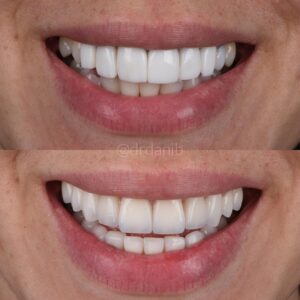
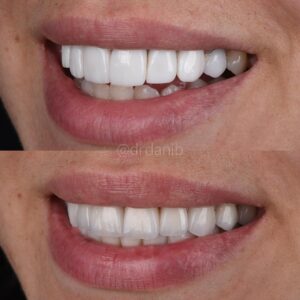
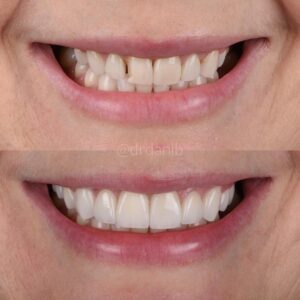
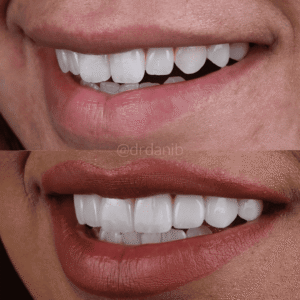
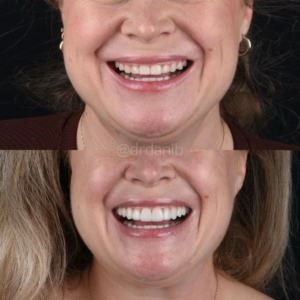
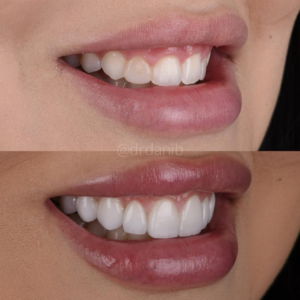
Porcelain veneers are an investment in your smile, and understanding the cost is an important part of deciding whether treatment is right for you. At Dr. Dani B.’s Los Angeles practice, porcelain veneers typically range from $1,900 to $3,000 per tooth, depending on the materials, treatment complexity, and customization involved.
You may be considering veneers to correct two uneven front teeth, close small gaps, or improve the appearance of several teeth. The number of veneers you need isn’t always obvious. Sometimes treating just a few teeth achieves the desired result, while other cases benefit from a more comprehensive approach.
During your consultation, Dr. Dani B. evaluates your teeth, bite, facial proportions, and aesthetic goals before recommending a treatment plan. You’ll understand the expected cost and available options before deciding how to proceed.
How Much Do Porcelain Veneers Cost in Los Angeles?
The cost of porcelain veneers varies between practices, even within Los Angeles. Materials, laboratory craftsmanship, treatment planning, and the condition of your teeth all influence the final price.
At our practice, the typical cost is $1,900 to $3,000 per veneer.
Single Veneer vs. Full Smile Makeover
A single veneer can require considerable precision, particularly when it’s placed on a front tooth. Matching the color, translucency, and texture of surrounding teeth takes careful planning.
For patients considering several veneers, the estimated costs are:
| Number of Veneers | Estimated Cost |
|---|---|
| 1 | $1,900–$3,000 |
| 6 | $11,400–$18,000 |
| 8 | $15,200–$24,000 |
| 10 | $19,000–$30,000 |
| 12 | $22,800–$36,000 |
These estimates reflect our published per-tooth range. Additional dental treatment, if needed, may affect the total.
We don’t automatically recommend veneers for every visible tooth. Dr. Dani B. considers how the proposed changes will affect your entire smile and whether a smaller treatment plan could accomplish your goals.
What Affects the Cost of Porcelain Veneers?
Porcelain Materials
The ceramic used to create your veneers affects their appearance, strength, and suitability for your teeth.
Lithium disilicate, commonly known as e.max, offers strength and natural-looking translucency. Feldspathic porcelain allows detailed layering of color and texture, which can be particularly useful when matching surrounding teeth.
Neither material is universally better. Your natural tooth color, enamel, bite, and desired appearance help determine which option is most appropriate.
Custom Craftsmanship
Natural teeth aren’t perfectly uniform. Their color changes subtly from the gumline to the biting edge, and their surfaces reflect light differently.
Creating veneers that reproduce these characteristics requires skilled ceramic work. Our in-house master ceramist collaborates with Dr. Dani B. on the shape, shade, texture, and fit of each restoration.
This attention to detail is especially important when replacing one visible tooth or creating a smile that doesn’t look artificially uniform.
Treatment Planning and Dentist Experience
Veneers need to complement your facial features while functioning comfortably with your bite.
Dr. Dani B. evaluates tooth proportions, lip movement, alignment, and the relationship between your upper and lower teeth. He also considers how much healthy enamel can be preserved during preparation.
The goal isn’t simply to make teeth whiter or straighter. It’s to achieve the improvements you want without compromising the natural appearance or function of your smile.
Preparatory Dental Work
Some patients need treatment before veneers can be placed.
Cavities, gum inflammation, or other dental concerns should be addressed first. If your gumline is uneven, gum recontouring may also be considered to improve the proportions of your smile.
We’ll explain any recommended procedures, why they’re necessary, and whether they involve additional costs.
Which Veneer Material Is Right for You?
Porcelain veneers aren’t all manufactured the same way, and the most expensive material isn’t necessarily the best choice for your teeth.
Lithium disilicate offers a combination of strength and aesthetics. Feldspathic porcelain allows delicate color layering and may be suitable when a highly customized appearance is needed.
Minimal-prep and no-prep veneers are another consideration. These restorations can preserve more enamel in selected cases, but they require enough space to avoid making teeth appear bulky.
Composite resin is generally less expensive initially and can be easier to repair. However, it tends to stain and wear sooner than porcelain.
Dr. Dani B. will explain which materials and techniques suit your teeth rather than recommending an option based on price alone.
Also Read: Why Porcelain Veneers in Los Angeles Need Precise Edge Design
Why Veneer Quality Matters
A lower veneer quote doesn’t necessarily indicate poor treatment, but understanding what’s included can prevent unexpected problems.
Ask how your teeth will be prepared, who creates the veneers, and whether adjustments or follow-up appointments are included.
Preserving Healthy Tooth Structure
Enamel removal is permanent. Excessive preparation can increase sensitivity and weaken a tooth, sometimes leading to additional restorative treatment.
Dr. Dani B. emphasizes conservative preparation whenever possible. The amount of enamel removed depends on your tooth shape, existing alignment, and veneer design.
Teeth with extensive damage may be better suited to crowns rather than veneers.
Achieving a Natural Fit
Veneers that are too thick can look bulky or interfere with your bite. Poorly fitted edges may also trap plaque, increasing the risk of gum inflammation and decay.
Careful preparation, ceramic fabrication, and bonding help veneers blend with your teeth while supporting comfortable everyday function.
Are Porcelain Veneers Worth the Investment?
Porcelain veneers can improve tooth color, shape, and proportions while offering better stain resistance than composite resin.
Many last ten years or longer, although their lifespan varies. Grinding, oral hygiene, bite forces, and the condition of the underlying teeth all influence how long they remain in good condition.
Regular dental visits, brushing, flossing, and wearing a night guard when recommended can help protect your veneers.
It’s also important to consider alternatives. Whitening may address discoloration, while bonding or orthodontic treatment may be appropriate for certain cosmetic concerns. We’ll discuss these options when they could achieve your goals with less treatment.
Does Dental Insurance Cover Porcelain Veneers?
Dental insurance generally doesn’t cover veneers placed solely for cosmetic purposes.
Some plans may provide partial benefits when treatment addresses qualifying tooth damage, but coverage varies considerably. Your insurance provider determines whether a procedure qualifies.
Our team can help review your benefits and explain what information may be needed before treatment.
Financing Your Veneers
We offer financing options through CareCredit, Proceed Finance, Cherry, and Alphaeon Credit. Depending on your treatment plan, in-office payment arrangements may also be available.
Repayment periods, promotional offers, and interest rates depend on the financing provider and credit approval.
During your consultation, we’ll review your estimated treatment cost and available payment options.
What to Expect During Porcelain Veneer Treatment
Porcelain veneer treatment generally involves three visits over approximately five to seven weeks, although individual schedules vary.
Consultation and Smile Design
Your first appointment includes an examination of your teeth, gums, and bite, along with a discussion about what you’d like to change.
Dr. Dani B. uses photographs, digital scans, and smile design techniques to plan the proposed shape and appearance of your veneers. You’ll also receive a personalized treatment estimate.
Tooth Preparation and Temporary Veneers
When preparation is necessary, a small amount of enamel may be reshaped to accommodate the porcelain.
We take scans or impressions for your custom restorations. Temporary veneers may be placed so you can evaluate their appearance, length, and comfort before the permanent veneers are completed.
Final Fitting and Bonding
Our in-house ceramist creates your veneers according to the approved design.
At the final appointment, Dr. Dani B. checks their shade, fit, and bite before bonding them to your teeth. We’ll also explain how to care for your new smile.
Also Read: Veneers for Crooked or Chipped Teeth: Are They the Right Fix?
Why Choose Dr. Dani B. for Porcelain Veneers in Los Angeles?
Dr. Dani B. completed his undergraduate studies at UCLA and earned his dental degree from NYU College of Dentistry. He is a member of the American Dental Association, American Academy of Cosmetic Dentistry, and California Dental Association.
His approach combines careful cosmetic planning with an emphasis on preserving healthy tooth structure. Working closely with an in-house ceramist allows him to refine the details that make each smile individual.
Our Los Angeles practice welcomes patients from Beverly Hills, Century City, and throughout Southern California.
Frequently Asked Questions About Porcelain Veneer Costs
How Much Does a Full Set of Porcelain Veneers Cost?
Based on our published pricing, eight veneers cost approximately $15,200 to $24,000, while ten cost $19,000 to $30,000. Your final estimate depends on your treatment needs.
Why Are Porcelain Veneers Expensive?
The cost reflects customized ceramic fabrication, clinical planning, and the precision required to prepare, fit, and bond each veneer. More complex cases may require additional appointments or preparatory treatment.
How Long Do Porcelain Veneers Last?
Many porcelain veneers last ten years or longer with proper care. Their longevity depends on your bite, oral hygiene, grinding habits, and other factors.
Are Composite Veneers a Cheaper Alternative?
Composite resin generally costs less initially and can be repaired more easily. However, it typically stains and wears sooner than porcelain.
Can I Get Veneers Without Removing Enamel?
Some patients qualify for minimal-prep or no-prep veneers. Dr. Dani B. will evaluate whether these options can achieve a natural appearance without creating excessive bulk.
How Can I Get an Exact Veneer Price?
A consultation allows us to examine your teeth, discuss your goals, and recommend an appropriate treatment plan. We’ll provide an individualized estimate before treatment begins.
Schedule Your Porcelain Veneer Consultation in Los Angeles
You don’t need to decide how many veneers you want before visiting our office. Dr. Dani B. will evaluate your smile, explain which changes are realistic, and help you compare treatment options.
Whether you’re considering one veneer or a complete smile makeover, you’ll receive a personalized plan that addresses appearance, function, and cost.
Contact Dr. Dani B. to schedule your porcelain veneer consultation in Los Angeles.
Medical Disclaimer: This article provides general dental and pricing information and does not replace professional dental advice. Treatment costs, candidacy, and results vary. A clinical examination is necessary to determine appropriate treatment and provide an individualized estimate.